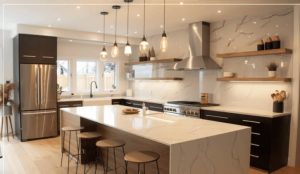
If you are planning a kitchen renovation, understanding how much do new kitchen cabinets cost can help you set a realistic budget before choosing your design. The price depends on the size of your kitchen, the materials you select, the number of units required and whether you install the cabinets yourself or hire a professional.
As a broad UK guide, replacing selected kitchen cabinets may cost around £1,000 to £3,000, while replacing most cabinets in a small or straightforward kitchen could cost £3,000 to £6,000. Larger kitchens, premium materials and bespoke designs can cost considerably more. These figures are planning estimates rather than fixed prices, and installation, delivery and removal may be charged separately.
This guide explains typical cabinet prices, the factors that influence your budget, the difference between budget and premium options, and practical ways to avoid unnecessary spending.
How much do new kitchen cabinets cost in the UK?
The cost of new kitchen cabinets varies widely because kitchens differ in size, layout and storage requirements. A compact kitchen with a few standard units will generally cost less than a large kitchen with extensive wall cabinets, tall pantry units and custom storage.
The following estimates can help you plan.
| Cabinet project | Estimated cost |
|---|---|
| Replacing one or two standard units | £150–£600 |
| Replacing selected cabinets | £1,000–£3,000 |
| New cabinets for a small kitchen | £1,500–£4,000 |
| New cabinets for a medium-sized kitchen | £3,000–£7,000 |
| New cabinets for a large kitchen | £5,000–£12,000+ |
| Premium or bespoke cabinetry | £10,000–£20,000+ |
These estimates are for planning purposes. The exact price depends on the number and type of units, cabinet construction, door finishes, internal fittings and installation requirements.
They may not include worktops, appliances, plumbing, electrical work, flooring, decorating or significant changes to the kitchen layout. Some suppliers sell cabinets as part of a complete kitchen package, while others price each unit separately.
Costs also vary by location, materials, labour, property size and project requirements. For this reason, obtain itemised quotations based on your actual measurements rather than relying on a general price range alone.
What affects the price of new kitchen cabinets?
Several factors determine the final cost. Understanding them can help you decide where to spend more and where a simpler option may be sufficient.
Kitchen size and number of units
The number of cabinets is one of the biggest influences on your budget. A kitchen with six base units and a few wall cupboards will usually cost less than one with numerous drawers, tall storage units and cabinets around several walls.
However, floor area alone does not determine the price. A small kitchen with expensive pull-out storage, custom corner units and integrated appliances may cost more than a larger kitchen fitted with straightforward standard cabinets.
Count the base cabinets, wall cabinets, tall units and specialist storage features you need. This gives you a more useful starting point than estimating costs from room size alone.
Cabinet materials
The material used for the cabinet boxes and doors affects both price and durability.
Common options include:
- Melamine-faced chipboard: Often an affordable choice for cabinet interiors and boxes. Quality varies according to construction, thickness and edge protection.
- MDF: Frequently used for painted or routed cabinet doors because it provides a smooth surface. It needs suitable protection in areas exposed to moisture.
- Plywood: Can offer good strength and stability, depending on its grade and construction, but may cost more than some standard alternatives.
- Solid wood: Often chosen for its natural appearance and ability to be repaired or refinished. Prices vary by timber species and workmanship.
- Laminate and foil finishes: Available in different colours and styles, with cost and durability depending on the product and manufacturing quality.
Do not assume that the most expensive material is always the best choice. Look at the complete cabinet construction, including joints, hinges, drawer runners and protection against moisture.
Door style and finish
Simple flat-fronted doors are often more affordable than detailed designs with decorative mouldings, intricate routing or specialist finishes.
The finish can also influence the price. Standard colours and finishes may be less expensive than custom colours, textured surfaces, real-wood veneers or hand-painted doors.
For example, a kitchen fitted with standard slab doors in a common finish may be more affordable than one with individually painted timber doors and decorative detailing.
If your budget is limited, choose a straightforward door design and use handles, lighting or a contrasting island to create visual interest.
Internal storage features
The inside of a cabinet can affect the total cost as much as the outside.
Basic shelves are generally less expensive than specialist fittings such as pull-out larders, corner carousels, internal drawers, bin systems and adjustable organisers.
These features can make a kitchen easier to use, but they should solve a genuine storage problem. Before paying for specialist fittings, consider whether ordinary shelves or standard drawers would meet your needs.
Custom sizes and unusual layouts
Standard-sized cabinets can help control costs because they are manufactured in common dimensions. Custom units may be necessary for sloping ceilings, awkward corners, unusual wall lengths or specific appliance requirements.
Bespoke cabinets can also provide a more fitted appearance, but measuring, manufacturing and installation may require additional time and labour.
If your kitchen has an awkward space, ask whether a standard unit with a filler panel could achieve a satisfactory result before ordering a custom cabinet.
How much does each type of kitchen cabinet cost?
Individual prices depend on dimensions, materials, finishes and the supplier. The following ranges are broad examples for standard UK cabinetry, not guaranteed prices.
| Cabinet type | Estimated price per unit |
|---|---|
| Basic base cabinet | £50–£180 |
| Standard wall cabinet | £50–£200 |
| Drawer cabinet | £100–£350 |
| Tall pantry cabinet | £150–£600+ |
| Corner cabinet | £100–£400+ |
| Specialist pull-out storage unit | £150–£700+ |
| Custom-made cabinet | £300–£1,000+ |
Some retailers sell cabinet boxes, doors, shelves and fittings separately. Others provide assembled units or packages that include several components. Check what is included before comparing prices.
A low advertised price may cover only the cabinet carcass, excluding the doors, handles, hinges or drawer runners. A more expensive unit may include these components, making the overall difference smaller than it first appears.
For a fair comparison, ask suppliers to price the same list of units with equivalent specifications.
Budget, mid-range and premium kitchen cabinets
Kitchen cabinets are available at several price levels. Your choice should reflect how often you use the kitchen, your design preferences and the amount you can reasonably spend.
Budget kitchen cabinets
Budget cabinets usually feature standard dimensions, straightforward designs and manufactured board construction. They can be suitable for rental properties, smaller kitchens or renovations where keeping costs under control is important.
Their main advantage is affordability. Standard products can also be easier to source and replace if a door or panel becomes damaged.
Before buying, check the thickness and finish of the cabinet boxes, the quality of the hinges and runners, and how exposed edges are protected. These details affect practical performance.
A low purchase price is less attractive if the units do not suit the room or require expensive adjustments during installation.
Mid-range kitchen cabinets
Mid-range cabinets often offer a wider selection of door finishes, storage options and fittings. Depending on the supplier, you may have access to better drawer systems, more durable finishes or a larger range of standard sizes.
This category can provide a useful balance between cost, appearance and everyday functionality.
For many homeowners, spending a little more on frequently used drawers, hinges and cupboard doors may be more beneficial than paying extra for decorative features that have little practical value.
Premium and bespoke kitchen cabinets
Premium cabinets may use higher-grade materials, specialist finishes, custom dimensions or more elaborate construction. Bespoke cabinetry can be particularly useful where standard units cannot make good use of the available space.
The main benefit is greater design flexibility. You can specify storage arrangements, dimensions and finishes around the room and your preferences.
However, premium cabinetry can take a larger share of the renovation budget. It is worth considering whether the additional cost delivers improvements you will notice and use every day.
What is included in the total cabinet replacement cost?
The price of the cabinets is only one part of the total project. If you are replacing existing units, include the cost of preparing the kitchen and fitting the new cabinets.
Typical additional expenses may include:
- Delivery and handling.
- Removal and disposal of old cabinets.
- Installation labour.
- New handles, hinges and drawer runners if not included.
- Filler panels, plinths and end panels.
- Adjustments to walls or floors.
- Worktop removal and refitting.
- Plumbing or electrical work where required.
- Repairs to damaged walls, flooring or pipework.
Installation charges vary according to the number of units, the complexity of the layout and the amount of preparation required. A straightforward replacement using cabinets of similar dimensions is generally simpler than a project that changes the location of appliances or requires extensive alterations.
Ask the installer to explain which tasks are included in the quotation. Confirm whether the price covers levelling the units, securing wall cabinets, fitting doors, adjusting drawers and making final alignment changes.
If the project includes a new worktop, sink or hob, coordinate the measurements and installation sequence before work begins. Incorrect cabinet dimensions can affect the fit of these items.
Example: budgeting for a small kitchen
Imagine you have a small kitchen and want to replace the existing base and wall cabinets without changing the plumbing or moving major appliances.
Your budget might include:
| Item | Illustrative estimate |
|---|---|
| Standard cabinet units and doors | £1,800 |
| Handles and additional fittings | £150 |
| Delivery | £100 |
| Installation | £800 |
| Removal and disposal | £200 |
| Estimated total | £3,050 |
This example shows how additional expenses can increase the total beyond the cabinet purchase price.
It is not a fixed quotation. Your actual costs will vary by location, materials, labour, property size and project requirements. The estimate also excludes worktops, appliances, flooring, decorating and any unexpected repairs.
If your existing worktop can be retained and the replacement cabinets match the current layout, you may avoid some extra expenses. If the new units have different dimensions, however, the worktop may need to be altered or replaced.
Is it cheaper to replace cabinet doors or install new cabinets?
You may not need to replace every cabinet to improve your kitchen.
If the existing cabinet boxes are solid and the layout works well, replacing the doors and drawer fronts can provide a significant visual change without removing the entire structure.
As a broad estimate, replacement doors and drawer fronts for a small kitchen might cost around £500 to £1,500, while larger kitchens or specialist designs can cost more. Additional expenses may apply for new hinges, frame coverings, fitting and repairs.
Refinishing the existing doors can cost less when they are suitable for sanding or repainting. However, some laminate and foil-covered surfaces need specialist preparation, and damaged doors may not be worth restoring.
Full cabinet replacement is more appropriate when the cabinet boxes are swollen, unstable or poorly designed. In that situation, paying for new doors may only postpone the need for more substantial work.
Before deciding, compare three options where practical: refinishing the existing cabinets, replacing the doors and drawer fronts, and replacing the complete units. Base the decision on condition and total cost rather than appearance alone.
How to reduce the cost of new kitchen cabinets
You can often make savings without choosing the lowest-quality cabinets available.
Keep the existing kitchen layout
Keeping the sink, cooker and major appliances in their current positions can reduce the need for associated plumbing and electrical changes. Retaining a suitable worktop may also save money.
This is most effective when the existing layout is functional and the new cabinet dimensions can be matched to the room.
Choose standard sizes
Standard units are often more economical than custom-built cabinets. Plan the layout around available sizes where possible, using suitable filler panels to accommodate small gaps.
Measure carefully before ordering, particularly around corners, pipes, windows and appliances.
Spend on useful features first
Prioritise features that make everyday tasks easier. Strong drawer runners, reliable hinges and well-planned storage may be more valuable than expensive decorative details.
You can choose simple doors and upgrade handles or lighting later if your budget is tight.
Compare complete quotations
Ask at least a few suppliers or installers to price the same cabinet list and specification. Compare materials, fittings, delivery, installation and removal rather than focusing on the initial cabinet price.
Check whether the quotations include VAT where applicable and whether additional work is excluded.
Consider partial replacement
If only a few cabinets are damaged, replacing those units may be more affordable than removing everything. This works best when matching cabinets are available and the surrounding units are in good condition.
Do not keep damaged units simply to save money if they are unsafe or affected by ongoing moisture.
Set aside a contingency
Unexpected problems can arise when old cabinets are removed, particularly in older kitchens. A contingency of around 10–20% may be reasonable for some projects, although the appropriate amount depends on the condition of the room and the work involved.
Keep this allowance separate from the money allocated to the cabinets themselves.
How to choose a reliable kitchen cabinet supplier
A good supplier should provide clear product specifications, accurate measurements and a written breakdown of costs.
Before placing an order, check the following:
- Whether the cabinet boxes, doors and fittings are all included.
- Whether the dimensions suit your room and appliances.
- What materials and finishes are used.
- Whether replacement doors and components are available.
- What the warranty covers and excludes.
- How damaged or missing items are handled.
- Whether delivery and installation are included.
- What preparation or building work you must arrange separately.
Ask for samples where possible. Colours can look different under showroom lighting compared with natural daylight in your home. A physical sample also allows you to assess the texture and finish.
For fitted cabinetry, confirm who is responsible for measuring the kitchen and checking the final design. If you are ordering cabinets yourself, make sure the installer has reviewed the plans before you commit to the purchase.
Frequently asked questions
How much do new kitchen cabinets cost without installation?
For a small kitchen, standard cabinet units may cost around £1,500 to £4,000 before installation, depending on the number of units, materials and fittings. Individual cabinets can cost considerably less or more. Always check whether the quoted price includes doors, hinges, shelves and other components.
How much does it cost to replace kitchen cabinets in a small kitchen?
Replacing most cabinets in a small kitchen may cost approximately £3,000 to £6,000, including straightforward installation. Premium products, custom units and additional work can increase the total. Costs vary by location, materials, labour, property size and project requirements.
Are assembled kitchen cabinets more expensive?
Assembled cabinets may cost more than flat-pack units, but the difference depends on the supplier and product. They can reduce the amount of assembly work required on site. Compare the total price, delivery arrangements and installation requirements before deciding.
How long do new kitchen cabinets last?
Their useful life depends on construction quality, installation, maintenance and exposure to moisture. Well-made cabinets can remain usable for many years, but no particular lifespan is guaranteed. Promptly repairing leaks and protecting vulnerable edges can help prevent avoidable damage.
Can I install kitchen cabinets myself?
DIY installation may be possible if you have the necessary skills, tools and accurate measurements. The work requires secure fixing, careful levelling and correct alignment, particularly for wall cabinets. Professional installation may be preferable for heavy units, uneven walls, complex layouts or projects involving changes to plumbing and electrical services.
Should I buy cabinets before choosing a worktop?
It is usually best to plan both together. Cabinet dimensions and positioning affect worktop measurements, while the worktop may influence support requirements and finishing details. Confirm the specifications and installation sequence with your supplier or installer before ordering either component.
Conclusion
The cost of new kitchen cabinets depends on the number of units, their materials, the finish, storage features and the work required to install them. A small project may cost a few thousand pounds, while a large or bespoke kitchen can require a much bigger budget.
Start by measuring the room and listing the cabinets you need. Compare standard and premium options, check what each quotation includes and allow for delivery, fitting and removal costs. If your existing cabinet boxes are sound, replacing the doors may be worth considering before committing to a full replacement.
Most importantly, choose cabinets that suit your kitchen, budget and everyday needs. A clear plan and detailed quotation will help you avoid unnecessary expenses and make a more confident renovation decision.