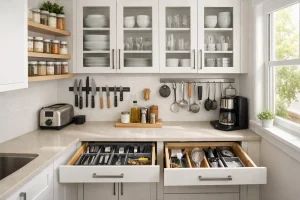
Kitchen storage ideas for small spaces can help you create a more organised, functional kitchen without adding extra square metres. Whether you have a narrow galley kitchen, a compact flat kitchen or a small cooking area in a terraced house, the right storage solutions can make everyday tasks easier.
Limited cupboard space does not always mean you need a complete kitchen renovation. You may be able to create more usable room by organising existing cabinets, using vertical wall space, adding drawer dividers and choosing storage accessories that suit your needs.
The goal is to make everything easier to find while keeping worktops clear and walkways safe. Before buying new organisers, take time to understand what you own, where you use it and which areas of your kitchen are currently being wasted.
1. Make the most of vertical wall space
Walls can provide valuable storage when floor space and cupboards are limited. Instead of filling every available surface with furniture, consider whether an empty wall could hold frequently used kitchen essentials.
Wall-mounted rails, hooks, shelves and magnetic holders can keep selected items accessible without taking up worktop space.
For example, a rail fitted near a food preparation area could hold a few cooking utensils, while a small shelf could accommodate everyday mugs or spice containers.
Useful options include:
- Wall-mounted rails for lightweight utensils.
- Hooks for mugs, provided the mounting surface and fittings are suitable.
- Narrow shelves for spices and small containers.
- Magnetic knife holders designed for kitchen use.
- Wall-mounted holders for kitchen roll.
- Pegboards fitted with suitable hooks and accessories.
Choose the position carefully. Items should not obstruct cooking, cleaning or movement around the room. Keep storage away from areas where it could be exposed to excessive heat, grease or moisture.
Before drilling into a wall, check for concealed pipes and electrical cables. Use fixings suitable for the wall construction and the weight being supported.
Vertical storage works best when it is selective. Covering every wall with shelves can make a small kitchen feel crowded, so prioritise the items you use most often.
2. Organise cupboards with adjustable shelves
Cupboards can contain more usable space than you realise. However, fixed shelves sometimes leave too much empty room above short items or too little clearance for taller containers.
Adjustable shelving allows you to change the arrangement to suit your belongings. If your existing cabinets support it, moving a shelf or adding another can improve how efficiently you use the available height.
You could dedicate one cupboard to plates and bowls, another to dry ingredients and a separate section to cooking equipment.
Shelf risers are another useful option. These small platforms create an additional level inside a cupboard, allowing you to store items above and below one another without stacking everything directly.
They can be especially helpful for mugs, tins, small bowls and plates, provided the shelves are stable and the items remain easy to retrieve.
Before buying organisers, measure the internal width, depth and height of your cupboards. Remember to account for hinges, pipes and other obstructions.
Avoid overcrowding shelves. You should be able to remove items without knocking over everything around them.
3. Use drawer dividers to control clutter
Kitchen drawers often become disorganised because different items are stored together. Cutlery, utensils, measuring spoons, scissors and small gadgets can quickly become difficult to locate.
Drawer dividers create separate sections for different categories. They are available in adjustable, expandable and fixed designs, allowing you to choose an arrangement that suits your drawer.
Consider organising drawers according to how you use the kitchen:
- Keep everyday cutlery near the dining or serving area.
- Store cooking utensils near the cooker.
- Place measuring tools near the area where you prepare ingredients.
- Keep tea towels and oven gloves in a suitable drawer away from heat sources.
- Store baking accessories together if you regularly make cakes or bread.
You do not need a separate compartment for every object. Too many dividers can waste space, especially in shallow drawers.
Start by removing items you no longer use. Group similar tools together, then measure the remaining space before purchasing a divider.
For deeper drawers, consider adjustable inserts or small containers that stop items moving around. Keep sharp tools safely stored and out of reach of young children where necessary.
4. Install pull-out storage where practical
Deep cupboards can be difficult to use because items at the back are easily forgotten. Pull-out storage brings the contents towards you, reducing the need to bend down or reach into dark corners.
Depending on the cabinet design, you could install sliding baskets, pull-out trays or narrow storage units.
Pull-out systems can be particularly useful for:
- Cleaning products stored beneath the sink.
- Pots, pans and lids.
- Dry food containers.
- Bottles and jars.
- Baking equipment.
- Items stored in narrow gaps beside appliances.
For example, a slim pull-out unit may fit into a suitable gap between a cupboard and a fridge, providing a place for oils, spices or packaged ingredients.
However, do not assume every narrow gap can accommodate a storage unit. Check the available width, depth, fixing requirements and clearance for doors and drawers.
Pull-out accessories can cost more than basic organisers, particularly when they need professional installation. Costs vary by location, materials, labour, property size and project requirements.
If your budget is limited, try rearranging existing shelves and using removable baskets before investing in built-in systems.
5. Make awkward corner cupboards more useful
Corner cupboards often have awkward shapes that make stored items difficult to reach. Small items can disappear behind larger cookware, while unused space remains at the back.
Several solutions can help you use these areas more efficiently.
A rotating shelf system can improve access to suitable corner cabinets. Pull-out corner mechanisms can bring cookware into view, although they may require specific cabinet dimensions and professional fitting.
If a new mechanism is not practical, organise the cupboard according to how often you use each item.
Keep everyday cookware near the front and move occasional-use equipment towards the back. Store lids vertically in a suitable rack instead of stacking them in an unstable pile.
You could also use labelled containers to group smaller items, making it easier to find what you need.
Avoid filling an awkward corner simply because space is available. If reaching into the cupboard is difficult, storing heavy items there may create unnecessary inconvenience.
The best solution is one that makes the contents easier to access rather than merely filling every empty area.
6. Choose stackable food containers
Food storage containers can help you organise cupboards and reduce wasted space. Containers with matching shapes and stackable lids are generally easier to arrange than a collection of unrelated tubs.
They are useful for storing flour, rice, pasta, cereal, pulses and other dry ingredients. Clear containers can also make it easier to see what remains, although opaque containers may be preferable for some foods.
When choosing containers, consider:
- Whether the lids close securely.
- Whether the containers stack safely.
- Whether the sizes fit your cupboard shelves.
- Whether they are suitable for the food being stored.
- Whether they can be cleaned easily.
- Whether the material is suitable for the intended use.
Label containers with the food name and, where useful, the opening date or best-before information from the original packaging.
Do not remove important allergen information or storage instructions when transferring packaged foods. Keep relevant details accessible, particularly if household members have food allergies.
Avoid buying a large container set before measuring your cupboards. A coordinated set may look attractive but still waste space if its dimensions do not suit your shelves.
7. Use the inside of cupboard doors
The inside of a cupboard door can provide additional storage without occupying a separate shelf or worktop.
Depending on the door’s construction and available clearance, you could fit small racks, hooks or organisers for lightweight items.
Possible uses include:
- Storing measuring spoons.
- Holding small packets of seasoning.
- Keeping reusable food bags together.
- Organising lightweight cleaning accessories.
- Storing selected lids or small utensils.
Check that the door can close properly once the organiser is installed. Items should not hit the shelves, hinges or stored products when the door moves.
Avoid placing heavy objects on fittings that are not designed to support them. The extra weight can strain the hinges or damage the door.
Be particularly careful with cleaning products. Store them securely and separately from food, following their labels and keeping them away from children.
Cupboard-door storage is most effective when used for small, lightweight objects that would otherwise occupy valuable drawer or shelf space.
8. Add storage beneath the sink
The area beneath a kitchen sink is often difficult to organise because the basin and pipework reduce the available space.
However, it can still provide useful storage if you select accessories designed around the obstacles.
A two-level organiser with an open section for pipes may be more practical than a solid shelf. Small waterproof trays can also help keep cleaning products grouped together.
Before buying anything, measure the height and width of the available area. Include the space needed for waste pipes, valves and any water filtration equipment.
Keep the cupboard reasonably dry and check periodically for leaks. Cleaning products should remain in their original containers, with labels intact, and should be stored separately from food.
Do not block access to plumbing connections or valves that may need inspection or maintenance.
If you have very little space under the sink, store only the products you use regularly. Keep bulk supplies in a suitable alternative location rather than forcing too many bottles into a cramped cupboard.
9. Keep worktops clear with dedicated appliance storage
Small kitchens often lose valuable preparation space to appliances that remain on the worktop throughout the day.
Kettles, toasters, coffee machines, blenders and air fryers can occupy a considerable amount of room when several are kept together.
Start by deciding which appliances you use every day. These may deserve a permanent place on the worktop, while occasional-use equipment can be stored in a cupboard or another suitable location.
You could also create an appliance station inside a cupboard or on a dedicated shelf, provided there is sufficient space and the manufacturer’s ventilation and electrical requirements are followed.
Do not operate appliances inside a closed cupboard unless they are specifically designed for that use. Heat and steam can damage surrounding surfaces and create safety risks.
Other practical options include:
- Using a shelf to raise a lightweight appliance where the structure can support it.
- Storing accessories beside the appliance they belong to.
- Keeping appliance manuals and spare parts together elsewhere.
- Removing unused or duplicate gadgets from the kitchen.
For example, if you only use a sandwich maker at weekends, storing it safely in a cupboard may free up a useful section of worktop every day.
10. Create a useful spice and seasoning area
Spices can occupy more cupboard space than expected, particularly when jars, packets and tins are mixed together.
A dedicated spice area makes ingredients easier to find and helps prevent duplicate purchases.
You could use a shallow drawer organiser, a tiered shelf inside a cupboard or a wall-mounted rack in a suitable location. Select a system that fits the amount of seasoning you actually use.
Group spices by category or arrange them alphabetically if you have a large collection. Labels should be easy to read, and containers should close securely.
Avoid placing spices directly beside a cooker or another source of heat and moisture, as these conditions may affect their quality.
Before buying matching jars, check their capacity and whether you can transfer the ingredients without losing essential product information. Keeping the original packaging or recording relevant details can be useful.
If you use only a small selection of seasonings, a compact organiser may be all you need. A large rack is unlikely to help if it takes up more space than the spices themselves.
11. Use the space above cabinets carefully
The gap above kitchen cabinets can provide storage in some kitchens, particularly where cupboards do not reach the ceiling.
It may be suitable for lightweight items that are rarely needed, such as occasional-use serving pieces or decorative containers. However, the area can collect dust and grease, especially near cooking equipment.
Before placing anything there, consider how safely you can reach it and whether the cabinet tops can support the weight.
Avoid storing heavy objects high above your head. Items should not be likely to fall when moved or disturbed.
If the gap is difficult to clean, open baskets or exposed containers may become dirty. Lidded storage can help protect suitable items, but it is still important to clean the area periodically.
For a longer-term renovation, extending cabinets upwards may provide more practical enclosed storage. Whether this is worthwhile depends on ceiling height, cabinet condition, access and budget.
Do not extend cabinets or install heavy overhead storage without confirming that the wall, fixings and cabinet structure can safely support the arrangement.
12. Use a kitchen trolley or movable island
A kitchen trolley can add storage and, in some designs, a small extra work surface. Because it can be moved, it may suit a kitchen where permanent cabinets would obstruct movement.
Look for a model that fits the available floor area and can be moved without blocking cupboards, drawers, doorways or appliance access.
Useful features may include shelves, drawers, a towel rail or lockable wheels. Choose according to what you need to store rather than the number of features offered.
A trolley can hold fruit, cookware or selected dry ingredients, provided the items are stored appropriately. Avoid using it for heavy objects if it is unstable or not designed for the load.
A compact movable island may also work in a larger small kitchen, but it needs enough clearance around it for people to move safely.
Measure the room with cupboard and appliance doors open before purchasing furniture. A trolley that fits when everything is closed may become an obstacle during meal preparation.
13. Store pots, pans and lids efficiently
Pots and pans can take up a large amount of cupboard space, particularly when they have long handles or bulky lids.
Start by grouping cookware according to size and use. Remove damaged items and consider whether you have duplicates that rarely leave the cupboard.
Where suitable, nest pans of different sizes together, using protective separators if needed to prevent damage to non-stick coatings or delicate surfaces.
Store lids in a vertical rack or a purpose-made organiser rather than balancing them in a stack. This can make it easier to find the right lid without removing every pan.
You could also use a sturdy, appropriately installed rail for selected cookware if the wall and fittings can safely support the weight. Heavy pans should not be hung from unsuitable hooks or weak surfaces.
Deep drawers can be convenient for cookware because they allow you to see the contents from above. If you are renovating, consider whether replacing some low cupboards with deep drawers would improve everyday access.
If replacing cabinets is not within your budget, removable dividers and a more deliberate arrangement may provide enough improvement.
14. Make recycling and rubbish easier to manage
Waste and recycling containers can occupy a surprising amount of floor space in a compact kitchen.
Where the cabinet design allows, an internal waste-sorting system may keep containers out of sight and make the room easier to move around.
Options include pull-out bins, compact recycling containers and separate caddies for food waste. Choose a system that suits the local collection arrangements and the amount of waste your household produces.
Measure the available cupboard space, including the clearance required to remove containers and open the door fully.
Keep waste containers accessible and clean them regularly to reduce odours and spills. Food waste should be handled according to local collection guidance.
If an internal system does not fit, consider narrow freestanding bins that use an otherwise awkward corner without obstructing access.
Do not sacrifice essential storage or make bins difficult to reach just to conceal them. A practical arrangement is more useful than one that looks tidy but is inconvenient to use.
15. Choose storage that fits your budget
You do not need to buy expensive fittings to organise a small kitchen. Some improvements can be achieved through decluttering and rearranging existing cupboards, while others may require new organisers or professional installation.
The following figures are broad UK planning estimates, not fixed prices.
| Storage improvement | Indicative cost |
|---|---|
| Basic drawer dividers and small organisers | £10–£50 |
| Food containers and cupboard baskets | £15–£100 |
| Wall rails and hooks | £10–£60 |
| Shelf risers and adjustable organisers | £10–£80 |
| Pull-out cupboard systems | £40–£250 or more |
| Professional installation of built-in storage | Varies considerably |
Actual prices vary by location, materials, labour, property size and project requirements. Product quality, cabinet dimensions, installation complexity and the amount of storage being added can all affect the final cost.
To avoid unnecessary spending, begin with the cheapest changes that solve a clear problem. Measure before shopping, reuse suitable containers and avoid buying accessories that duplicate storage you already have.
A sensible approach is to organise one cupboard or drawer at a time. Once you understand what works, you can apply the same principles elsewhere instead of purchasing a complete set of organisers immediately.
Frequently asked questions
How can I add storage to a small kitchen without renovating?
Start by decluttering cupboards, adjusting shelves and using drawer dividers. Wall rails, hooks, stackable food containers and cupboard-door organisers can also create additional usable space without changing the kitchen layout.
What is the best storage for a very small kitchen?
The best solution depends on what you need to store. Vertical shelves, adjustable cupboard organisers, pull-out trays and deep drawers can all be useful. Prioritise easy access and clear worktops rather than trying to fill every available gap.
How do I keep kitchen worktops clear?
Keep only frequently used appliances and essential items on the worktop. Store occasional-use equipment in suitable cupboards, move utensils to a wall rail where appropriate and give everyday items a specific place.
Are open shelves better than kitchen cupboards?
Open shelves provide easy access and can make a kitchen feel less enclosed, but they expose items to dust and cooking residue. Closed cupboards generally keep contents cleaner and can conceal clutter. A combination of both often works well.
How much does it cost to improve storage in a small kitchen?
Simple organisers may cost a few pounds to several dozen pounds, while pull-out systems and built-in storage can cost considerably more. Prices vary by location, materials, labour, property size and project requirements. Measure your space and compare suitable products before buying.
How can I organise a small kitchen on a tight budget?
Remove unused items first, group similar products together and rearrange existing shelves. Reuse suitable containers, add inexpensive drawer dividers where needed and invest in more expensive fittings only when they solve a persistent storage problem.
Conclusion
Kitchen storage ideas for small spaces work best when they reflect how you actually use your kitchen. You do not need to fill every wall or buy dozens of organisers to make a noticeable improvement.
Start by removing items you no longer need, organising existing cupboards and making better use of vertical space. Then consider drawer dividers, pull-out storage, food containers and other accessories that address specific problems.
Keep everyday essentials easy to reach, worktops clear and heavy items stored safely. Measure cupboards and available floor space before buying anything, and choose solutions that suit both your budget and your household’s routine.
With a few thoughtful changes, even a compact kitchen can become easier to organise, more comfortable to work in and simpler to maintain over time.