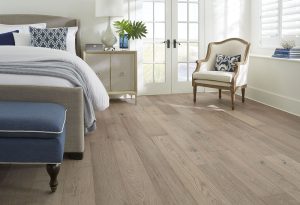
Choosing the best flooring for bedrooms can make a significant difference to comfort, appearance, noise levels and everyday maintenance. Bedroom floors should feel pleasant underfoot, suit the room’s design and cope with regular use without becoming difficult to clean or expensive to maintain.
Some homeowners prefer the softness of carpet, while others choose laminate, engineered wood, luxury vinyl or natural timber for a cleaner, more contemporary appearance. The right option depends on your budget, the condition of the existing floor, the people using the room and the atmosphere you want to create.
This guide explains the main bedroom flooring options, their advantages and disadvantages, installation requirements and maintenance needs. It also covers costs, flooring choices for different types of bedrooms and practical mistakes to avoid before starting a renovation.
What should you consider when choosing bedroom flooring?
Bedrooms have different flooring requirements from kitchens and bathrooms. They usually experience less direct moisture, but comfort, warmth, sound insulation and ease of cleaning are particularly important.
Before selecting a material, consider these factors.
-
Comfort underfoot: You may walk across the bedroom barefoot, especially in the morning. Carpet, cork and some vinyl products can feel softer than hard flooring.
-
Temperature: Certain materials feel warmer than others, particularly in rooms with poor insulation or cold subfloors.
-
Noise: Flooring can affect footsteps and sounds travelling between floors. Underlay and installation methods also influence noise levels.
-
Cleaning: Dust, pet hair and allergens can collect in some flooring types more readily than others.
-
Durability: Consider how frequently the room is used, whether children play on the floor and whether pets sleep in the bedroom.
-
Appearance: The flooring should complement the bed, wardrobes, wall colours, curtains and other furniture.
-
Moisture resistance: Ground-floor bedrooms and rooms with a history of damp may need additional investigation before new flooring is installed.
-
Budget: Include the cost of materials, underlay, installation, floor preparation, trims and removal of existing flooring.
Think about your daily routine as well. A guest bedroom used occasionally may not need the same durability as a main bedroom used by several people and pets.
For example, a carpet may suit a quiet main bedroom where comfort is the priority, while wood-effect vinyl may be more practical for a child’s bedroom where spills and frequent cleaning are more likely.
Best flooring for bedrooms: the main options compared
Several materials can work well in bedrooms. The most suitable choice depends on whether you value softness, natural appearance, durability or straightforward maintenance.
| Flooring type | Main advantage | Main drawback | Best suited to |
|---|---|---|---|
| Carpet | Soft and comfortable underfoot | Can collect dust and stains | Main bedrooms and guest rooms |
| Laminate | Affordable wood-effect appearance | Can sound hollow without suitable underlay | Budget-conscious renovations |
| Engineered wood | Natural timber surface with a stable construction | More expensive than many laminate options | Main bedrooms and premium interiors |
| Solid hardwood | Natural appearance and potential for refinishing | Can be costly and sensitive to moisture | Long-term home improvements |
| Luxury vinyl flooring | Easy-care surface with many designs | Can be damaged by sharp objects or unsuitable installation | Children’s bedrooms and busy homes |
| Cork | Naturally resilient and relatively warm underfoot | Can fade or become damaged without suitable protection | Bedrooms where comfort matters |
| Bamboo | Distinctive appearance and a hard surface | Quality and moisture performance vary | Contemporary interiors |
| Polished concrete | Modern, minimal appearance | Hard and potentially cold underfoot | Industrial-style homes |
Always check the manufacturer’s specifications for the exact product. Flooring materials can vary considerably in quality, finish, installation requirements and expected performance.
Carpet: a comfortable choice for bedrooms
Carpet remains a popular bedroom flooring option because it creates a soft surface that feels comfortable underfoot. It can also help reduce the sound of footsteps and make a room feel more inviting.
Carpet is available in different fibres, pile heights, colours and patterns. This makes it suitable for traditional bedrooms, modern interiors and rooms designed around a particular colour scheme.
Its main advantages include:
-
A soft surface for walking barefoot.
-
A wide choice of colours and textures.
-
Reduced impact noise from footsteps.
-
A comfortable surface for children sitting or playing on the floor.
-
The ability to create a warm, coordinated appearance.
Carpet can be particularly suitable for a main bedroom where comfort and a quieter atmosphere are important.
However, carpet requires regular vacuuming because dust, hair and other particles can become trapped within the fibres. Spills may also leave stains if they are not cleaned promptly.
The type of fibre affects its performance. Wool carpet can offer a natural appearance and resilience, while synthetic fibres such as nylon and polyester have different levels of stain resistance, softness and durability depending on the product.
A low-pile carpet may be easier to clean than a deep, plush option, especially if you have pets. A suitable underlay can improve comfort and help reduce noise, although the carpet and underlay should be selected as a compatible system.
If anyone in the household has particular allergy concerns, consider how easily the flooring can be cleaned and discuss suitable options with a healthcare professional where necessary. Carpet is not automatically unsuitable for every person with allergies, but maintenance needs should be considered.
Laminate flooring: an affordable wood-effect finish
Laminate flooring is a popular alternative to timber because it can imitate the appearance of oak, walnut and other wood finishes without using a solid timber surface.
It generally consists of a decorative image layer, a core and a protective top layer. The quality of these components affects how well the floor resists wear, scratches and everyday use.
Laminate can work well in bedrooms because they usually experience less moisture than kitchens and bathrooms.
Its benefits include:
-
A wide range of wood-effect designs.
-
A relatively simple cleaning routine.
-
A consistent appearance across larger areas.
-
Options to suit different budgets.
-
Compatibility with some underfloor heating systems when the manufacturer approves the combination.
Laminate is usually cleaned by sweeping or vacuuming and using a lightly damp mop where permitted by the manufacturer. Excess water should be avoided unless the product’s instructions explicitly allow the relevant cleaning method.
One drawback is that laminate can sound hollow or produce a clicking noise underfoot if the subfloor is uneven or the underlay is unsuitable.
It can also be vulnerable to moisture entering through joints, depending on the product. This makes it important to address leaks and damp before installation.
For a guest bedroom or a rental property renovation, laminate can offer a practical balance between appearance, maintenance and initial cost.
Engineered wood: a natural timber surface
Engineered wood flooring combines a real wood top layer with a supporting structure made from several layers of wood-based material. This construction can make it more dimensionally stable than solid timber under changing indoor conditions.
It provides the natural grain and texture of real wood while offering a range of plank sizes, colours and finishes.
Advantages include:
-
A genuine timber surface.
-
A natural appearance that suits many interior styles.
-
A choice of finishes, including matt and brushed textures.
-
Greater dimensional stability than many solid wood boards.
-
The potential to refinish some products, depending on the thickness of the top wood layer.
Engineered wood can work particularly well in a main bedroom where you want a natural finish that complements wooden furniture or neutral colours.
However, it usually costs more than basic laminate. It can also be scratched by furniture, damaged by standing water or affected by unsuitable cleaning products.
The installation method matters. Some products are glued down, while others are fitted using a floating system or another manufacturer-approved method. The subfloor must meet the product’s requirements for moisture and flatness.
If you want the appearance of timber without covering the entire floor with carpet, engineered wood can be a good compromise. A rug beside the bed can provide a softer surface for your feet in the morning.
Solid hardwood: a traditional and long-lasting option
Solid hardwood flooring is made from timber throughout the thickness of each board. Common choices include oak and other hardwood species, with different grains, colours and finishes.
One of its main attractions is that some solid wood floors can be sanded and refinished several times, depending on their thickness and condition. This can help restore their appearance after years of use.
Other advantages include:
-
Natural variation in grain and colour.
-
A classic appearance that works with many bedroom styles.
-
The potential for long-term maintenance and refinishing.
-
The ability to change the appearance with certain finishing treatments.
Solid hardwood can suit homeowners who value natural materials and want flooring that may be renewed rather than replaced when its surface becomes worn.
However, timber responds to changes in moisture and humidity. Boards can expand, contract or develop gaps when indoor conditions change. The risk depends on the species, construction, installation and environment.
Solid wood may also be more expensive than laminate or some engineered products. Installation can require specialist skills, and not every subfloor is suitable.
Before choosing solid timber, make sure the room has no unresolved damp problems and that the product is appropriate for the property’s conditions.
Luxury vinyl flooring: practical for busy bedrooms
Luxury vinyl flooring is available in planks, tiles and other formats. Many designs imitate wood or stone, while the surface is generally softer underfoot than ceramic tiles.
It can be a useful option for children’s bedrooms, guest rooms and households where easy cleaning is a priority.
Its advantages include:
-
A wide range of colours and realistic decorative patterns.
-
Simple everyday cleaning.
-
A more resilient feel than many hard surfaces.
-
Options designed to resist everyday wear.
-
The ability to coordinate bedroom flooring with other rooms.
Some products are fully waterproof, while others have specific restrictions. Always check the manufacturer’s instructions rather than assuming that every vinyl floor has the same moisture performance.
Luxury vinyl is not immune to damage. Sharp objects, heavy furniture dragged across the surface and unsuitable cleaning chemicals can mark or damage it.
Subfloor preparation is also important. Uneven areas, debris or imperfections may become visible through some thin vinyl products, and certain installation methods require particular adhesives.
For a teenager’s bedroom, for example, wood-effect vinyl may provide a practical surface that is easy to clean after everyday spills. In a main bedroom, it can also work well with a large rug to create a softer, more layered look.
Cork flooring: a softer alternative
Cork flooring is made from the bark of cork oak trees and is available in several finishes and construction types.
It has a naturally resilient feel, which can make it comfortable for people who prefer a surface that is not as hard as timber or laminate.
Potential benefits include:
-
A softer feel underfoot than many hard flooring materials.
-
Some natural sound-absorbing qualities.
-
A distinctive appearance.
-
A surface that can feel relatively warm.
-
Options made with different finishes and protective coatings.
Cork may be suitable for bedrooms where comfort and reduced impact noise are priorities.
However, its performance depends on the product and finish. Cork can be scratched, dented or affected by moisture if it is not adequately protected. Some products may also fade with prolonged exposure to direct sunlight.
Check the manufacturer’s cleaning instructions and whether the flooring needs periodic resealing. Heavy furniture may require suitable protective pads to reduce the risk of indentations.
Cork can be an interesting choice for a reading room or a bedroom where you want a softer alternative to conventional wood-effect flooring.
Bamboo flooring: a distinctive modern option
Bamboo flooring is made from processed bamboo rather than conventional timber. It is available in different constructions and finishes, including products designed to resemble wooden boards.
Its appearance can suit contemporary interiors, particularly where simple furniture and natural colours are used.
Possible advantages include:
-
A distinctive grain and finish.
-
A hard surface for everyday foot traffic.
-
A range of colours and styles.
-
Options made using different manufacturing methods.
However, bamboo products vary in hardness, construction quality and resistance to moisture. Some are more susceptible to swelling, scratching or changes in indoor conditions than others.
The manufacturing process, adhesives and finish can also affect product quality. Check the specifications, warranty and suitability for your subfloor before purchasing.
Bamboo may suit a bedroom where you want a natural-looking alternative to conventional timber, but compare it with engineered wood before making a decision.
Is polished concrete suitable for bedrooms?
Polished concrete can create a clean, minimalist appearance, particularly in modern homes with open layouts and simple furnishings.
It offers a hard, continuous surface and can be finished in different shades and levels of sheen.
Its advantages include:
-
A contemporary appearance.
-
Few visible joints compared with many tiled floors.
-
Straightforward sweeping and cleaning.
-
Compatibility with certain modern interior designs.
However, concrete is hard underfoot and can feel cold, particularly in rooms without effective insulation or underfloor heating.
It may also transmit sound more readily than carpet or cork. The final appearance depends on the quality of the concrete, preparation, polishing process and protective treatment.
Cracks and imperfections may be visible, and some projects require specialist work to achieve the intended finish.
If you like the appearance of concrete but want a softer bedroom environment, consider a concrete-effect vinyl floor or a large rug alongside a suitable hard floor.
Best flooring for small bedrooms
The right flooring can help a small bedroom feel more open and organised. Colour, plank direction and the amount of visual contrast all influence how the space is perceived.
Lighter flooring can reflect available light and create a more open appearance, especially when paired with pale walls and simple furnishings.
Useful design ideas include:
-
Choose light oak, pale beige or soft grey finishes for a bright look.
-
Use longer planks to create a sense of direction through the room.
-
Keep the flooring consistent with adjoining spaces where practical.
-
Avoid overly busy patterns if the room already contains patterned bedding or curtains.
-
Use a rug to add comfort without covering the entire floor.
-
Consider how wardrobe doors and bedroom doors will clear the finished floor height.
Large floorboards or wide planks can create a clean appearance, but the best choice depends on the room’s dimensions and layout.
In a small guest bedroom, for example, pale wood-effect laminate with a neutral rug can create a simple, coordinated finish without overwhelming the space.
Do not choose flooring solely to make the room appear larger. Comfort, maintenance and suitability for the existing subfloor remain important.
Bedroom flooring for children, pets and allergy concerns
The people using the bedroom should influence your flooring decision.
For children’s bedrooms, durability and cleaning are often priorities. Carpet offers a comfortable surface for playing, while luxury vinyl or laminate can be easier to wipe clean after spills.
For pets, consider how easily hair can be removed and whether claws may scratch the surface. A durable hard floor with a washable rug may be practical, although rugs should sit securely to avoid slipping.
If noise between floors is a concern, carpet with suitable underlay can help reduce the sound of footsteps. Underlay and flooring systems should be chosen for compatibility and the building’s requirements.
For households concerned about dust or allergens, consider how easily the floor can be cleaned and how often you can maintain it. Hard flooring can make visible dust easier to remove, while carpet can hold particles until they are vacuumed. Neither option removes the need for regular cleaning.
Also consider indoor air quality. Look for information about emissions from flooring, adhesives and underlays, and follow the manufacturer’s ventilation recommendations during and after installation.
Bedroom flooring costs and budgeting
The total cost of bedroom flooring depends on the material, the size of the room and the work required before installation.
Carpet and basic laminate may have lower initial costs than premium engineered wood or solid hardwood. However, a low material price does not necessarily mean the whole project will be inexpensive.
Costs can vary by location, materials, labour, property size and project requirements. They may also be affected by transport, the removal of old flooring, subfloor repairs and the availability of specialist installers.
Include the following items when preparing your budget:
| Cost item | What to include |
|---|---|
| Flooring material | Price per square metre and allowance for cutting waste |
| Underlay | Product suitable for the flooring and subfloor |
| Subfloor preparation | Levelling, repairs or moisture treatment where necessary |
| Installation | Labour and any specialist fitting requirements |
| Old flooring removal | Lifting, transport and disposal |
| Trims and thresholds | Doorway transitions, edging and skirting details |
| Furniture handling | Moving or temporarily storing large furniture |
| Contingency | Allowance for unexpected repairs or additional materials |
Measure the room carefully, including alcoves and areas around built-in wardrobes. Ask installers whether their quotation includes underlay, trims, waste disposal and any necessary preparation.
It is sensible to keep some money aside for unexpected problems, especially when replacing flooring in an older property.
Avoid fitting new flooring over damp, damaged or unstable surfaces simply to reduce costs. Addressing the underlying issue first can help prevent premature damage and additional work later.
Common bedroom flooring mistakes to avoid
A good flooring choice can still disappoint if important practical details are overlooked.
One common mistake is selecting a material based entirely on its appearance. A glossy or dark finish may look attractive in a showroom but may show dust, scratches or marks more clearly in everyday use.
Other mistakes include:
-
Ignoring the condition and moisture level of the subfloor.
-
Choosing an underlay that is unsuitable for the flooring.
-
Failing to account for doors and wardrobe clearances.
-
Using excessive water when cleaning laminate or timber.
-
Forgetting to allow the flooring to acclimatise when the manufacturer requires it.
-
Choosing a surface that is difficult to maintain with pets or children.
-
Buying too little material to allow for cutting and future repairs.
-
Installing flooring before resolving damp or ventilation problems.
Another important consideration is underfloor heating. Not every material is suitable for every heating system, and some products have strict limits on operating temperatures and installation methods.
Check compatibility before buying flooring, underlay or adhesive.
Frequently asked questions
What is the best flooring for bedrooms overall?
Carpet is a strong choice if comfort, softness and reduced footstep noise are your priorities. Engineered wood is suitable if you prefer a natural timber surface, while laminate and luxury vinyl offer practical alternatives with a range of designs. The best choice depends on your budget, maintenance preferences and household needs.
Is carpet or laminate better for a bedroom?
Carpet feels softer and can reduce impact noise, making it attractive for main bedrooms. Laminate is generally easier to clean and offers a wood-effect appearance. If you have pets or young children, consider cleaning needs, noise and the likelihood of spills before deciding.
What is the cheapest bedroom flooring?
Basic carpet and laminate are often among the more affordable options, although prices differ by product and location. Installation, underlay, floor preparation and removal of existing materials also affect the total cost. Compare complete quotations rather than looking only at the price per square metre.
Which bedroom flooring is easiest to maintain?
Luxury vinyl and laminate are generally straightforward to maintain with regular sweeping or vacuuming and cleaning methods approved by the manufacturer. Carpet requires more frequent vacuuming, while natural timber may need more careful protection against moisture and scratches.
Is wood flooring suitable for bedrooms?
Yes. Engineered wood and solid hardwood can both work well in bedrooms when correctly selected and installed. They provide a natural appearance, but timber can respond to changes in moisture and humidity. Choose a product suitable for your room and follow the manufacturer’s installation and maintenance instructions.
What flooring is best for a child’s bedroom?
Carpet can provide a soft surface for playing, while luxury vinyl and laminate may be easier to clean after spills. Consider durability, comfort, noise and cleaning requirements. A securely positioned rug can add softness to a hard floor, provided it does not create a tripping hazard.
Conclusion
The best flooring for bedrooms is the material that balances comfort, appearance, durability and maintenance for your household. Carpet remains an excellent option for a soft, quiet bedroom, while laminate offers a practical wood-effect finish at a range of price points.
Engineered wood provides the appeal of real timber, luxury vinyl suits busy households that value easy cleaning, and cork offers a softer alternative to conventional hard flooring. Solid hardwood, bamboo and polished concrete may also work well when their specific requirements are understood.
Before making your final choice, assess the subfloor, compare installation costs and check the manufacturer’s guidance on cleaning, moisture and underfloor heating. Consider how the room is used every day rather than selecting a material based on appearance alone.
With careful planning and suitable installation, you can create a bedroom floor that complements your home, feels comfortable underfoot and remains practical for years to come.