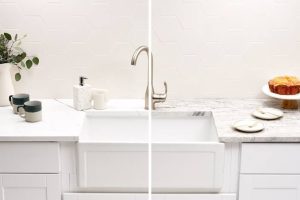
Choosing between quartz vs granite countertops can be challenging when both materials offer an attractive finish and practical benefits. They are popular choices for kitchen worktops, but they differ in composition, maintenance, heat resistance, appearance and cost. Understanding these differences will help you select a surface that suits your kitchen and everyday routine.
Quartz worktops are manufactured using quartz minerals, resins and other materials, creating a surface with a relatively consistent appearance. Granite is a natural stone, so every slab has its own pattern and mineral variations. Quartz is often preferred for its low maintenance, while granite appeals to homeowners who value natural stone and individual character.
Neither material is automatically better for every household. The right choice depends on your budget, cooking habits, preferred style and willingness to maintain the surface. This guide compares their main features, costs, advantages and disadvantages to help you make an informed decision.
What is the difference between quartz and granite?
The main difference is how the materials are formed and manufactured.
Quartz worktops are generally engineered surfaces made using crushed quartz minerals combined with resins, pigments and other ingredients. The precise composition varies by manufacturer. This manufacturing process allows a broad choice of colours, patterns and finishes.
Granite is a natural igneous rock formed when molten material cools and solidifies beneath the Earth’s surface. It contains different minerals, which create its characteristic speckles, veins and colour variations.
Because quartz is manufactured, its appearance can be more predictable. Granite, by contrast, varies naturally from slab to slab. This makes selecting the actual piece particularly important if you want a specific pattern.
Both materials can provide durable kitchen surfaces when properly selected and installed. However, they have different limitations.
| Feature | Quartz | Granite |
|---|---|---|
| Material | Engineered surface containing quartz minerals | Natural stone |
| Appearance | Often consistent and available in controlled designs | Naturally varied patterns and colours |
| Stain resistance | Generally high because the surface is non-porous | Depends on the stone and whether it is sealed |
| Heat resistance | Sensitive to excessive heat because of resin content | Generally tolerates heat well, but sudden temperature changes can cause damage |
| Routine sealing | Usually not required | May be required, depending on the stone |
| Scratch resistance | Generally good, but not scratch-proof | Generally good, but not scratch-proof |
| Repairs | Chips and damage may need specialist repair | Chips and damage may need specialist repair |
| Typical price | Medium to high | Medium to high |
These are general characteristics. The performance of individual products depends on their composition, finish, thickness, installation and care instructions.
Quartz vs granite countertops: which is more durable?
Durability is one of the most important factors when choosing a kitchen worktop. The surface needs to cope with food preparation, cleaning, kitchen equipment and everyday contact without becoming difficult to maintain.
Both quartz and granite are durable options, but they respond differently to heat, impact and staining.
Quartz durability
Quartz worktops are generally hard and resistant to everyday scratches. Their non-porous surfaces also help prevent common kitchen substances from penetrating the material.
This can make quartz practical for busy households where spills are frequent. Coffee, cooking oil and other substances are usually easier to remove when cleaned promptly using suitable products.
However, quartz is not indestructible. Heavy impacts can chip exposed edges, particularly around sinks, corners and cut-outs. Dragging rough or heavy objects across the surface may also cause damage.
Heat is another limitation. The resins used in engineered quartz can be affected by excessive temperatures. Placing a hot pan directly on the worktop may cause discolouration, cracking or other damage, depending on the product and circumstances.
Using trivets and following the manufacturer’s guidance is therefore important.
Granite durability
Granite is a hard natural stone that can withstand normal kitchen use. Many granite worktops tolerate heat well, making them appealing to people who cook frequently.
However, granite is not immune to damage. A heavy impact can chip an edge, and sudden temperature changes may create stress in the stone. Some varieties are also more porous than others, which affects their susceptibility to staining.
Granite’s durability depends partly on the particular slab and how it is installed. Proper cabinet support, accurate cut-outs and suitable sealing where required can help maintain its performance.
Which material lasts longer?
There is no universal winner. A well-made quartz worktop and a properly installed granite worktop can both provide many years of service.
The more useful question is which material is likely to perform better under your conditions. If you frequently deal with spills and want straightforward cleaning, quartz may suit you. If heat tolerance and natural stone are priorities, granite may be more appealing.
Regardless of your choice, use chopping boards, protect the surface from direct heat and clean up spills promptly.
Which countertop is more resistant to stains?
Stain resistance matters in kitchens where coffee, tea, sauces, oil and acidic foods are used regularly.
Quartz is generally highly stain-resistant because its engineered surface is non-porous. Most everyday spills can be removed with a soft cloth and a suitable cleaning solution. However, certain chemicals, harsh cleaners or prolonged exposure to staining substances can still affect some products.
Granite’s stain resistance varies according to the type of stone. Some slabs are relatively dense, while others absorb liquids more readily. A suitable penetrating sealer can reduce the risk of staining, but it does not make the stone completely stain-proof.
For example, imagine you regularly prepare coffee and tomato-based sauces. Quartz may offer reassurance because liquid is less likely to penetrate its surface. With granite, you should follow the supplier’s advice on sealing and clean spills as soon as practical.
It is also important to understand the difference between staining and etching. A stain occurs when a substance discolours the surface. Etching is a change to the surface finish caused by a chemical reaction. This is particularly associated with acid-sensitive stones such as marble, rather than being a typical concern with granite.
For both materials, avoid abrasive cleaners and products that are not approved for the specific surface.
Which is more heat-resistant: quartz or granite?
Heat resistance is an area where granite generally has an advantage.
Granite is natural stone and typically tolerates heat better than engineered quartz. Even so, placing very hot cookware directly on granite is not recommended. Sudden temperature changes can create thermal stress, and some sealants may be affected by heat.
Quartz contains resin, which can be sensitive to high temperatures. Direct contact with a hot saucepan or baking tray can damage the surface, potentially leaving marks that are difficult to repair.
If you regularly move hot cookware around the kitchen, make trivets or heat-resistant mats part of your routine. This is a sensible precaution even when using granite.
Do not assume that a worktop is safe for direct contact with hot cookware simply because it is stone. Check the manufacturer’s instructions for the exact product you are considering.
Appearance and design options
The appearance of a kitchen worktop affects the whole room. It interacts with the cabinet colour, flooring, splashback, lighting and handles, so it is worth considering the complete design rather than choosing the surface in isolation.
Quartz appearance
Quartz offers a broad range of colours and patterns, including plain white, grey, beige, black and designs inspired by natural marble.
Because it is manufactured, the pattern can be relatively consistent across different sections. This can make it easier to plan a kitchen where several worktop pieces need to look similar.
Quartz is particularly useful if you want a uniform finish or a specific colour that is difficult to find in natural stone.
However, different manufacturers offer different designs, and some premium patterns may cost more than standard colours.
Granite appearance
Granite offers natural variation that cannot be reproduced exactly from one slab to another. Its appearance may include small mineral flecks, sweeping patterns or contrasting areas of colour.
This variation is attractive to homeowners who want a natural material with individual character. It can also make the worktop a focal point in a simple kitchen.
The challenge is that a small sample may not show the full pattern of the slab. If possible, inspect the actual slab before ordering, particularly when selecting a prominent colour or fitting a large island.
Which looks better in a modern kitchen?
Both can work well in contemporary designs. Quartz may suit kitchens where a consistent white or grey surface is desired, while granite can provide natural texture and contrast.
For traditional kitchens, a granite slab with warm mineral colours may complement wooden cabinets. Quartz can also suit traditional styles, especially when paired with detailed doors or classic handles.
The best choice is the one that works with your cabinets, lighting and overall design.
How much do quartz and granite countertops cost?
Quartz and granite are generally more expensive than basic laminate worktops, although their prices overlap considerably. Neither material has a single fixed price because products differ in quality, thickness, colour and availability.
As a broad UK planning guide, material prices may fall within these ranges:
| Material | Indicative material cost per square metre |
|---|---|
| Quartz | £200–£500+ |
| Granite | £200–£500+ |
These are estimates, not guaranteed supplier prices. Some products cost less, while premium slabs and specialist finishes may exceed these ranges.
The installed price can include additional expenses such as:
- Measuring and templating.
- Delivery and handling.
- Cutting and polishing edges.
- Sink and hob cut-outs.
- Tap holes and joins.
- Removal and disposal of the existing worktop.
- Installation and any required cabinet adjustments.
Costs vary by location, materials, labour, property size and project requirements. A large kitchen island or a layout with several joins may cost more to fabricate and install than a simple worktop with straight edges.
Quartz may be more expensive than some granite options, but the reverse can also be true. Unusual colours, slab availability and finishing requirements can have a significant effect on price.
Request an itemised quotation for each material using the same measurements and specifications. This will make the comparison more meaningful.
Maintenance: which worktop is easier to care for?
Maintenance can influence how satisfied you are with a worktop over time. Consider not only daily cleaning but also any occasional treatments needed to protect the surface.
Maintaining quartz
Quartz generally needs little routine maintenance beyond regular cleaning.
Useful practices include:
- Wiping spills with a soft cloth.
- Using cleaning products approved by the manufacturer.
- Avoiding abrasive pads and harsh chemicals.
- Using chopping boards rather than cutting directly on the surface.
- Keeping hot cookware on trivets.
- Avoiding heavy impacts on corners and edges.
Quartz usually does not require periodic sealing. However, always check the care instructions for the exact product, as recommendations can differ.
Maintaining granite
Granite also benefits from regular cleaning with suitable products. Depending on the stone, the supplier may recommend applying a penetrating sealer periodically.
Sealing helps reduce absorption, but the frequency depends on the stone’s porosity, the product used and the level of use. Do not assume every granite worktop needs sealing at the same interval.
Avoid acidic or abrasive cleaners unless the manufacturer confirms they are suitable. Wipe spills promptly, especially around joints and cut-outs.
Which is better for a busy family?
Quartz may be the more convenient choice if you prefer low-maintenance surfaces and do not want to think about periodic sealing.
Granite can still be practical for family kitchens, provided you follow its care instructions. The amount of maintenance required will depend on the particular stone.
Neither material is completely maintenance-free. Routine cleaning and sensible use are important for both.
Installation and repair considerations
Quartz and granite are heavy materials that generally require careful handling and professional installation. They should not be treated like a simple DIY replacement unless you have the relevant skills, equipment and experience.
Before installation, the cabinets need to be level and strong enough to support the worktop. The supplier should confirm the required support, especially around islands, overhangs and cut-outs.
Accurate measurements are essential. Errors around sinks, hobs, walls and corners can lead to expensive corrections.
Both materials can chip or crack under certain conditions. Repair options depend on the location and severity of the damage, the colour and pattern, and the expertise of the repairer. A repair may remain visible, particularly on patterned surfaces.
It is worth asking the supplier how chips, cracks or other defects are handled and what the product warranty covers. A warranty may have exclusions relating to impact damage, improper use or installation by an unapproved installer.
If you are renovating an older kitchen, check whether the existing cabinets can support the chosen surface. Replacing the worktop without assessing the units underneath can create problems later.
Which countertop is better for your lifestyle?
Your cooking habits and maintenance preferences should guide your final decision.
Quartz may be the better fit if:
- You prefer consistent colours and patterns.
- You want a surface that is generally resistant to everyday stains.
- You want to avoid routine sealing.
- You value straightforward cleaning.
- You are prepared to protect the surface from direct heat.
Granite may be the better fit if:
- You prefer the character of natural stone.
- You want a material that generally tolerates heat well.
- You like the variation found in individual slabs.
- You are comfortable with the recommended maintenance.
- You want a natural finish that may become a feature of the kitchen.
Consider a practical example. A household with young children, frequent spills and a preference for simple cleaning may favour quartz. Someone who values natural patterns and often cooks with hot pans nearby may prefer granite, while still using trivets as a precaution.
Neither decision is inherently better. The most suitable worktop is the one that matches your priorities and fits your budget.
Common mistakes when choosing quartz or granite
One mistake is selecting a worktop based only on a small sample. Natural granite can vary considerably, while quartz patterns may look different across a large installation. View larger samples or the actual slab where possible.
Another mistake is assuming that granite never needs sealing or that quartz cannot stain. Performance depends on the specific product and how it is maintained.
It is also easy to underestimate installation costs. Sink cut-outs, hob openings, polished edges, delivery and removal can add to the total price.
Do not overlook cabinet support. Heavy stone worktops need an appropriate base, and damaged or uneven cabinets should be addressed before installation.
Finally, avoid choosing a surface without checking its care requirements. A worktop may look ideal in a showroom but become frustrating if its maintenance needs do not suit your routine.
Frequently asked questions
Is quartz better than granite for kitchen countertops?
Quartz may be better if you want a consistent design, high stain resistance and low routine maintenance. Granite may be preferable if you value natural variation and generally stronger heat tolerance. The best choice depends on your priorities, budget and the specific products available.
Which is cheaper, quartz or granite?
Their prices often overlap. Some granite options cost less than quartz, while premium granite slabs can be more expensive than standard quartz. Compare installed quotations rather than relying only on the material price per square metre.
Does granite need to be sealed?
Some granite worktops benefit from a penetrating sealer, while the need and frequency depend on the stone’s porosity and the product used. Ask the supplier for recommendations specific to your slab and follow the maintenance instructions.
Can quartz countertops crack?
Yes. Although quartz is generally durable, excessive heat, impact or problems with support and installation can cause damage. Proper installation and using trivets can help reduce avoidable risks.
Can I put hot pans on granite or quartz?
It is safest to use a trivet for both materials. Granite generally tolerates heat better, but sudden temperature changes can still cause damage. Quartz contains resin that may be affected by high temperatures.
Which countertop is easier to clean?
Quartz is generally easier to maintain because it is non-porous and usually does not require sealing. Granite can also be straightforward to clean, but some varieties need sealing and more careful attention to the recommended cleaning products.
Conclusion
The choice between quartz vs granite countertops depends on the balance you want between appearance, maintenance, heat resistance and cost.
Quartz offers consistent designs, good stain resistance and straightforward care, making it a practical choice for many busy kitchens. Granite provides natural variation, a distinctive stone appearance and generally better heat tolerance, although some varieties require periodic sealing.
Before deciding, compare the actual products, check their maintenance instructions and obtain itemised installation quotations. Make sure your cabinets can support the chosen worktop and include cut-outs, delivery and finishing in your budget.
By considering your daily routine alongside appearance and price, you can choose a countertop that suits your kitchen and remains practical for years to come.