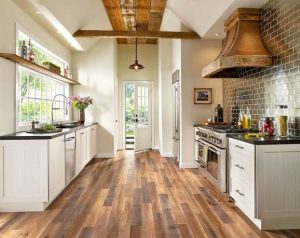
Choosing the best flooring options for kitchens means finding a surface that can handle spills, frequent cleaning, dropped utensils and everyday foot traffic while complementing the rest of your home. Kitchen flooring needs to be practical, but it should also look attractive and feel comfortable underfoot.
Popular choices include luxury vinyl flooring, porcelain tiles, ceramic tiles, laminate, engineered wood, natural stone and sheet vinyl. Each has different advantages in terms of durability, water resistance, maintenance, appearance and cost.
The right option depends on your budget, the condition of your existing floor, the amount of cooking you do and whether you prefer a modern, traditional or natural look. This guide compares the main flooring materials, explains their limitations and provides practical advice to help you make a suitable choice for your kitchen.
What should you look for in kitchen flooring?
Kitchen floors experience different conditions from those in many other rooms. Water can splash around the sink, grease may collect near the cooker, and chairs, appliances and heavy cookware can put pressure on the surface.
Before choosing a material, consider the following factors.
- Water resistance: Can the floor cope with spills and occasional splashes without swelling or becoming damaged?
- Durability: Will it withstand daily foot traffic, moving chairs and dropped household items?
- Slip resistance: Does the surface provide suitable grip, particularly when wet?
- Cleaning: Can you remove food stains, grease and dirt without special treatments?
- Comfort: Is the floor comfortable enough for standing while cooking or washing dishes?
- Appearance: Does it complement your cabinets, worktops, walls and adjoining rooms?
- Installation: Can it be fitted over your existing floor, or will the subfloor need preparation?
- Cost: Can you afford the materials, labour, underlay, adhesive and finishing work?
No flooring material is ideal in every situation. Porcelain tiles can be very durable but may feel hard underfoot. Laminate can provide an attractive wood effect but may be vulnerable to water entering its joints. Vinyl is often practical and comfortable, but its durability depends on the product and installation.
The best choice is the one that suits your kitchen’s conditions and your household’s needs.
Best flooring options for kitchens compared
The table below summarises some of the most common choices for UK homes.
| Flooring type | Main advantage | Main drawback | General cost level |
|---|---|---|---|
| Luxury vinyl flooring (LVT) | Comfortable and available in many designs | Can be damaged by sharp objects or unsuitable installation | Low to medium |
| Porcelain tiles | Hard-wearing and highly water-resistant | Hard and potentially slippery depending on finish | Medium to high |
| Ceramic tiles | Practical and available in many styles | Can chip or crack under heavy impact | Low to medium |
| Laminate | Attractive wood-effect designs at accessible prices | Water can damage many products | Low to medium |
| Engineered wood | Natural timber appearance | Needs protection from moisture | Medium to high |
| Natural stone | Unique patterns and a premium appearance | May require sealing and specialist care | High |
| Sheet vinyl | Few or no joints across a small room | Can tear or dent, depending on quality | Low to medium |
Prices depend on product quality, thickness, finish and installation requirements. The cost categories are relative rather than fixed.
Luxury vinyl flooring for kitchens
Luxury vinyl flooring, often called LVT, is a popular option for kitchens because it combines practical features with a wide range of designs. It is available in planks and tiles that can imitate timber, stone, concrete or ceramic surfaces.
Some products are designed to resemble natural materials closely, making vinyl suitable for homeowners who want a particular appearance without using the original material.
Advantages of luxury vinyl flooring
Many LVT products are water-resistant, and some are waterproof when installed as specified by the manufacturer. This makes them useful in areas where occasional spills are likely.
Vinyl generally feels warmer and softer underfoot than ceramic or porcelain tiles. This can be helpful if you spend long periods standing while preparing meals.
It is also available in many colours, patterns and plank sizes. You can choose a wood-effect design to complement traditional cabinets or a stone-effect finish for a contemporary kitchen.
Some LVT products use click-lock systems, while others require adhesive. The appropriate installation method depends on the product and the condition of the subfloor.
Disadvantages of luxury vinyl flooring
Vinyl is not immune to damage. Sharp objects, heavy furniture and dragging appliances can scratch, dent or tear the surface.
Subfloor preparation is important, particularly with thinner products that may show imperfections beneath them. Uneven surfaces can affect the finished appearance and the performance of the floor.
Not every vinyl product has the same water resistance. Even where the planks themselves are waterproof, water may reach the subfloor through poorly sealed edges, joints or surrounding fittings.
Who should choose LVT?
Luxury vinyl is worth considering if you want a practical, relatively comfortable floor with a wide choice of designs. It can be particularly suitable for busy family kitchens where easy cleaning and everyday comfort matter.
Porcelain tiles
Porcelain tiles are manufactured from refined clay and other minerals at high temperatures. They are dense and generally absorb very little water, making them a strong option for kitchens.
They come in a wide range of sizes and finishes, including designs that resemble timber, natural stone and polished concrete.
Advantages of porcelain flooring
Porcelain is highly durable when the correct tile is selected and installed properly. It resists ordinary kitchen spills, does not swell like many wood-based materials and is straightforward to clean.
It is also suitable for many high-traffic areas. Good-quality porcelain can retain its appearance for years when cared for correctly.
Large-format tiles can create a spacious, modern look by reducing the number of visible grout lines. Smaller tiles may suit traditional kitchens or areas with more complicated layouts.
Disadvantages of porcelain flooring
Porcelain is hard underfoot and can feel cold, especially in winter. Dropped glasses, plates and other fragile items are also more likely to break on a hard tile floor.
The surface finish matters. Polished or very smooth tiles can become slippery when wet, so choose a product with suitable slip-resistance characteristics for a kitchen.
Installation requires accurate cutting, appropriate adhesives and a level, stable base. Labour can therefore add significantly to the overall cost.
Who should choose porcelain?
Porcelain is a strong choice if durability and water resistance are priorities. It is particularly suitable for homeowners who want a long-lasting tiled floor and are comfortable with a harder surface underfoot.
Ceramic tiles
Ceramic tiles are another established option for kitchen floors. They are generally made from clay-based materials and fired in a kiln. Their specifications vary, so it is important to choose tiles rated for floor use rather than selecting a product intended only for walls.
Advantages of ceramic tiles
Ceramic flooring is available in many colours, patterns and sizes. It can complement traditional kitchens, modern designs and decorative interiors.
Many ceramic floor tiles are easy to clean and handle everyday spills well. They can also be more affordable than some porcelain products, depending on the design and quality.
Disadvantages of ceramic tiles
Some ceramic tiles are less dense and more vulnerable to chipping than porcelain. A heavy pan or dropped object may damage the surface.
As with other tiled floors, grout lines need proper cleaning and maintenance. Damaged grout can allow moisture to reach the substrate, while unsuitable tile finishes may become slippery when wet.
Who should choose ceramic tiles?
Ceramic tiles are worth considering if you want a tiled floor with plenty of design options and a moderate material cost. Check the tile’s suitability for floor use, expected traffic and wet conditions before buying.
Laminate flooring in kitchens
Laminate flooring often imitates wood, providing the appearance of timber at a relatively accessible price. It usually consists of a decorative surface layer, a core made from wood-based material and a protective top layer.
Modern products vary considerably, including options marketed for use in kitchens and other areas where spills are possible.
Advantages of laminate
Laminate is available in many wood-effect colours and patterns. It can complement a wide range of cabinet styles, from light contemporary finishes to darker traditional designs.
It is often comfortable to walk on compared with hard tiles, and some products are straightforward to install using click-lock joints.
For homeowners working with a limited budget, laminate can provide an attractive alternative to real wood.
Disadvantages of laminate
The main concern is moisture. Many laminate floors have a wood-based core that can swell if water enters the joints or reaches damaged edges.
Some products are designed to provide improved water resistance, but this does not mean every laminate floor can tolerate standing water or leaks. Follow the manufacturer’s instructions carefully.
Laminate can also be difficult to repair if the surface is deeply scratched, chipped or swollen.
Who should choose laminate?
Laminate may be suitable for kitchens where spills are managed promptly and a wood-effect appearance is important. Choose a product specifically approved for kitchen use and consider vinyl or tiles if frequent water exposure is likely.
Engineered wood flooring
Engineered wood provides a natural timber appearance while using a layered construction. The top layer consists of real wood, supported by additional layers designed to improve stability.
It offers a different feel from vinyl or laminate because the visible surface is genuine timber.
Advantages of engineered wood
Engineered wood can add warmth and character to a kitchen. It works particularly well in open-plan spaces where the same flooring continues from the kitchen into a dining or living area.
Depending on the thickness of the real-wood surface layer and the manufacturer’s guidance, some products may be suitable for refinishing.
Its layered construction can also make it more dimensionally stable than some solid wood flooring, although it is still affected by moisture.
Disadvantages of engineered wood
Water spills need prompt attention. Excess moisture can damage the surface, joints or underlying layers, and leaks may cause problems even when the top finish appears intact.
The timber surface can also scratch, dent or fade with wear. Some finishes require specific cleaning products, and not every engineered floor can be sanded and refinished.
Who should choose engineered wood?
Engineered wood is a good option if natural timber is important to your design and you are prepared to protect it from moisture. It may suit kitchens that form part of a larger open-plan living space.
Natural stone flooring
Natural stone flooring includes materials such as slate, limestone, travertine and granite. Each stone has its own colour variations, texture and maintenance requirements.
Stone can give a kitchen a distinctive appearance, especially when paired with natural wood cabinets or traditional finishes.
Advantages of natural stone
Every piece has natural variations, creating a floor with individual character. Many stone floors can also last for a long time when the correct material is selected and maintained properly.
Some stones are available in textured finishes that provide useful grip, although suitability depends on the specific product and its surface treatment.
Disadvantages of natural stone
Stone is not one uniform material. Some types are porous and may need sealing to reduce staining and moisture absorption. Acid-sensitive stones can also be damaged by certain cleaning products and food substances.
Stone tiles can be heavy, and the subfloor must be suitable for their installation. Cutting, fitting and finishing can increase labour costs.
Who should choose natural stone?
Natural stone suits homeowners who value distinctive materials and are willing to follow the recommended care routine. Before buying, confirm the stone’s resistance to stains, suitability for kitchens and sealing requirements.
Sheet vinyl flooring
Sheet vinyl is supplied in rolls rather than individual planks or tiles. It can be useful in smaller kitchens because it may provide a largely continuous surface with fewer joints.
It is available in a range of colours and designs, including patterns that imitate wood or stone.
Advantages of sheet vinyl
Sheet vinyl is often an affordable option and can be relatively comfortable underfoot. Depending on the product and installation, fewer seams may reduce the number of places where surface spills can enter.
It is also available in designs suitable for simple or decorative kitchens.
Disadvantages of sheet vinyl
The surface can tear, dent or become damaged by sharp objects and heavy furniture. Repairing a damaged section without leaving a visible mark can be difficult.
The subfloor must be properly prepared, and seams or edges need suitable installation. Water can still reach the underlying floor if the material is damaged or fitted incorrectly.
Who should choose sheet vinyl?
Sheet vinyl can suit homeowners looking for an economical, easy-to-clean surface. It is especially worth considering for smaller kitchens where a continuous finish is desirable.
How much does kitchen flooring cost?
The cost of kitchen flooring depends on the material, product quality, room dimensions and installation requirements. The following figures are broad UK planning estimates for materials per square metre.
| Flooring type | Indicative material cost per square metre |
|---|---|
| Sheet vinyl | £10–£35 |
| Laminate | £10–£40 |
| Luxury vinyl flooring | £20–£60 |
| Ceramic tiles | £15–£50 |
| Porcelain tiles | £20–£70+ |
| Engineered wood | £30–£90+ |
| Natural stone | £40–£120+ |
Actual prices can fall outside these ranges, particularly for premium finishes or specialist products.
Installation costs are usually additional. Other expenses may include underlay, adhesive, grout, trims, floor levelling, removal of the old floor and disposal of waste.
Costs vary by location, materials, labour, property size and project requirements. A small kitchen may have a higher cost per square metre if the installer needs to make many cuts around cabinets, doorways and pipes.
For example, a straightforward vinyl installation over a suitable, level subfloor may cost less than fitting natural stone tiles that require careful preparation and specialist cutting.
When requesting quotations, ask whether the price includes preparing the subfloor, moving appliances, removing existing flooring and fitting trims. These details make it easier to compare estimates fairly.
How to choose the right flooring for your kitchen
Start by identifying your main priorities.
If you want easy cleaning and a comfortable surface, luxury vinyl may be a good fit. If you value long-term durability and a tiled finish, porcelain may be more suitable. Laminate can provide a wood-effect look at a lower material cost, while engineered wood offers genuine timber for homeowners prepared to protect it from moisture.
Consider the people using the kitchen. A busy family may benefit from a floor that is easy to clean and handles frequent spills. Someone who cooks for long periods may prefer a surface that feels more comfortable underfoot.
Think about the room’s appearance as well. Light flooring can help a small kitchen feel more open, while darker tones may create contrast against pale cabinets. The right choice depends on lighting, cabinet colour and the overall design.
If the kitchen opens into a dining room or living area, consider whether the same flooring should continue throughout. Using one surface can create visual continuity, but the material must be suitable for the conditions in every connected room.
Common kitchen flooring mistakes to avoid
One mistake is choosing flooring based only on its appearance. A surface that looks attractive in a showroom may not suit a kitchen where water spills are frequent.
Another is assuming that water-resistant flooring is completely waterproof. Water can still reach the subfloor through joints, damaged edges or poorly fitted areas. Check the product specifications and follow the installation instructions.
Ignoring the subfloor can also cause problems. Uneven or unstable surfaces may lead to movement, visible imperfections, loose tiles or damaged joints. Proper preparation is essential for a reliable result.
Do not overlook slip resistance. Glossy finishes can become slippery when wet, so choose a product designed for the conditions in which it will be used.
Finally, avoid budgeting for materials alone. Underlay, adhesive, grout, trims, labour and removal of the existing floor can significantly affect the total cost.
Frequently asked questions
What is the best flooring for a busy kitchen?
Luxury vinyl and porcelain tiles are both worth considering. Vinyl generally provides a softer, warmer surface, while porcelain offers a hard-wearing and highly water-resistant finish. The best option depends on your budget, comfort preferences and installation requirements.
Is vinyl flooring better than laminate for kitchens?
Vinyl is often the more practical choice where spills are common because many products are water-resistant or waterproof when correctly installed. Laminate offers attractive wood-effect designs but may be vulnerable to water entering its joints. Always check the specifications of the exact product.
Are tiles too cold for kitchen floors?
Ceramic and porcelain tiles can feel cold underfoot, particularly in winter. Underfloor heating may help where the flooring system and installation are suitable. Alternatively, vinyl or another softer material may provide a warmer feel without additional heating.
Can I install new kitchen flooring over the existing floor?
Sometimes. The existing floor must be stable, level, dry and compatible with the new material. Certain products can be installed over suitable existing surfaces, while others require removal of the old flooring. Follow the manufacturer’s instructions and check door clearances and appliance heights before proceeding.
What is the easiest kitchen flooring to clean?
Vinyl, porcelain tiles and many ceramic tiles are generally straightforward to clean. However, grout may require additional attention, and some flooring finishes need specific cleaning products. Regularly removing spills and grease helps maintain the appearance of any kitchen floor.
How long does kitchen flooring last?
Its lifespan depends on the material, product quality, installation, traffic and maintenance. Well-installed tiles may last for many years, while vinyl, laminate and engineered wood can also provide long service when used appropriately. Preventing moisture damage and following the manufacturer’s care instructions can help extend the floor’s useful life.
Conclusion
The best flooring options for kitchens combine practical performance with a design that suits your home. Luxury vinyl is attractive for its comfort and versatility, porcelain and ceramic tiles offer durable tiled finishes, laminate provides an affordable wood effect, and engineered wood or natural stone can create a distinctive appearance.
Before making a decision, consider water exposure, slip resistance, cleaning requirements and the condition of your subfloor. Compare the complete installed cost rather than the material price alone, and choose a product designed for kitchen use.
A carefully selected and properly installed floor can improve the appearance of your kitchen while making everyday cooking, cleaning and family life easier.