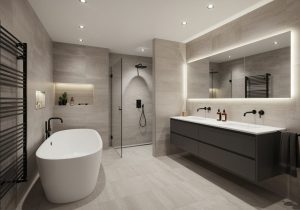
Learning how to make a small bathroom look bigger does not always require removing walls or carrying out an expensive renovation. With the right colours, lighting, storage solutions and fittings, even a compact bathroom can feel brighter, more open and easier to use.
Small bathrooms often feel cramped because of bulky furniture, poor lighting, crowded surfaces or layouts that interrupt the available space. Fortunately, many of these problems can be improved without changing the room’s footprint.
Whether you live in a small flat, have a narrow family bathroom or want to improve a compact en-suite, there are practical ways to create a more spacious appearance. This guide explores simple decorating changes, storage ideas, flooring choices and renovation options to help you make the most of every centimetre.
How to make a small bathroom look bigger with colour
Colour can influence how spacious a bathroom feels. Light shades reflect more light when compared with darker finishes of similar reflectance, helping a room appear brighter when the lighting and surfaces are suitable.
White, pale grey, soft beige and light cream are popular choices because they create a clean, open appearance. Pale green and muted blue can also work well if you prefer a little colour without making the room feel visually crowded.
You do not need to make every surface white. The aim is to create a balanced scheme in which the walls, ceiling and larger fittings work together.
Consider these practical ideas:
- Use a light or neutral colour on the main walls.
- Choose a ceiling colour that blends with the walls to reduce strong visual boundaries.
- Keep large surfaces relatively simple.
- Introduce stronger colours through towels, small accessories or artwork.
- Use similar tones across the walls and larger fittings for a more continuous appearance.
For example, a narrow bathroom with cream walls, pale flooring and a white vanity unit may feel more open than the same room with several contrasting dark finishes.
However, darker colours are not automatically unsuitable. A deep green feature wall can create depth and character when combined with effective lighting and carefully chosen fittings. The key is to avoid making every surface compete for attention.
Use mirrors to create a greater sense of space
Mirrors are one of the most useful tools for making a small bathroom feel more spacious. They reflect light and can create the impression that the room extends beyond its actual walls.
A large mirror above the basin often works better visually than several small decorative mirrors. If the layout allows, choose a mirror that extends across much of the vanity area.
A mirrored cabinet can provide two benefits at once: it reflects light while offering storage for toiletries, toothbrushes and other everyday items.
For the best result, consider the mirror’s position carefully. Placing it opposite a light source or where it reflects an uncluttered part of the room can make the bathroom feel brighter.
Avoid positioning mirrors where they reflect a crowded shelf or an untidy corner, as this can make the space feel busier rather than larger.
Safety is also important. Choose a mirror suitable for bathroom conditions and make sure it is securely fitted, especially if it is large or heavy.
Improve bathroom lighting
Poor lighting can make a small bathroom feel gloomy and enclosed. A well-planned lighting arrangement helps reveal the room’s full dimensions and makes everyday tasks easier.
Where possible, make the most of natural light. Keep window coverings simple and avoid placing tall storage units directly in front of windows.
If privacy is a concern, suitable frosted glass or an appropriate window covering can allow daylight into the room without making it feel exposed.
Artificial lighting should provide enough illumination across the bathroom rather than concentrating all the light in one place.
Useful options include:
- Ceiling lights that distribute light evenly.
- Mirror lighting for shaving, skincare and other close-up tasks.
- Wall lights where the layout and electrical requirements allow.
- Lighting inside suitable storage units, if practical.
Avoid relying on a single dim light in the centre of the ceiling. It may leave corners dark and create strong shadows.
Bathroom electrical fittings must be suitable for their location and the level of moisture exposure. Use a qualified electrician for new wiring or changes to electrical installations.
Choose wall and floor finishes that create continuity
The surfaces covering the walls and floor can influence how large a bathroom appears. A simple, coordinated design often creates a calmer visual effect than several contrasting materials.
Large-format tiles can reduce the number of visible grout lines, helping walls and floors appear less fragmented. They may be especially effective in bathrooms with a straightforward layout, although the tile size should suit the room and the installer must prepare the surface correctly.
Light-coloured tiles can help reflect light, while tiles that use similar shades across the floor and walls may create a more continuous appearance.
Other practical choices include:
- Using a consistent flooring material throughout the visible floor area.
- Keeping decorative patterns to one area rather than using several competing designs.
- Choosing grout colours that complement the tiles.
- Avoiding unnecessary changes in floor level or material.
- Selecting finishes that are suitable for wet areas and easy to maintain.
Large tiles are not the only option. Small mosaic tiles can work well in specific areas, such as a shower floor, where the surface needs to follow a slope towards the drain.
Prioritise suitable slip resistance and waterproofing over appearance alone. The finished surface must be appropriate for the conditions in which it will be used.
Install a wall-hung toilet or vanity unit
Traditional bathroom fittings can occupy valuable visual and physical space. Wall-hung designs can make the floor easier to see, which may help the room feel more open.
A wall-hung toilet leaves the floor beneath the pan visible, while a floating vanity unit creates a similar effect under the basin.
These fittings can also make cleaning the floor easier because there are fewer hard-to-reach areas around their bases.
However, wall-hung installations require suitable structural support and careful planning. A concealed toilet cistern may need a supporting frame and access for future maintenance. Wall-mounted basins and cabinets must also be securely fixed.
Installation can cost more than fitting conventional floor-standing units, particularly if the wall needs strengthening or plumbing alterations.
Costs vary by location, materials, labour, property size and project requirements. Before choosing wall-hung fittings, obtain a detailed quotation that includes any necessary structural work, plumbing and finishing.
If your budget is limited, a compact floor-standing vanity with slim legs can create a similar sense of openness without requiring a full installation change.
Choose a shower screen instead of a bulky enclosure
A heavy shower curtain or an enclosure with thick, dark frames can visually divide a small bathroom. A clear glass screen may make the space feel more open because it allows the eye to see through the shower area.
If your bathroom has a shower over the bath, a simple glass bath screen can be a practical alternative to a curtain. It helps contain splashes without creating a large visual barrier.
For a separate shower, consider a clear screen with minimal framing if it suits the layout and budget.
A walk-in shower can also create a more continuous appearance, particularly when the floor finish extends into the shower area. However, this option requires careful planning for drainage, floor gradients, waterproofing and splash control.
Frosted or patterned glass can provide additional privacy, but it may interrupt the visual flow more than clear glass.
Choose safety glass designed for the intended application and ensure that the screen is installed securely. Keep the glass clean so that water marks do not reduce the sense of openness.
Make better use of vertical space
When floor space is limited, look upwards. Wall-mounted storage can provide useful capacity without filling the room with bulky furniture.
Shelves above the toilet, a narrow cabinet beside the basin or a tall, shallow storage unit may help keep essential items organised.
However, avoid filling every available wall with shelving. Too many visible objects can make the room feel cluttered.
Useful vertical storage ideas include:
- A mirrored cabinet above the basin.
- A slim shelf for a small number of everyday items.
- Hooks behind the door for towels or dressing gowns.
- A tall, narrow cabinet in an unused corner.
- Recessed shelves inside a shower wall, where suitable construction and waterproofing allow them.
Recessed storage can be particularly effective because it uses space within the wall rather than projecting into the room. It is not suitable for every wall, however, and must be planned carefully to avoid pipes, wiring and structural elements.
Store frequently used products where they are easy to reach and keep spare toiletries elsewhere if possible.
Reduce clutter with clever bathroom storage
Clutter can make a small bathroom feel crowded even when the layout is reasonable. Bottles around the basin, towels on every surface and cleaning products beside the toilet all compete for attention.
The solution is not necessarily to remove everything. Instead, give everyday items a defined place.
A vanity unit with drawers can hide toiletries while keeping them accessible. Divided organisers can stop small items from becoming mixed together, and a mirrored cabinet can provide storage without taking up extra floor space.
Consider using matching containers for products that need to remain visible. A coordinated arrangement can look tidier than a collection of differently shaped bottles.
It is also worth reviewing what actually needs to be kept in the bathroom. Extra towels, bulk cleaning supplies and rarely used products may fit better in a hallway cupboard or bedroom storage unit.
For a small family bathroom, separate baskets or drawers for each person’s essentials can make the room easier to maintain.
Keep storage away from areas where it could obstruct movement or interfere with safe access to the bath, shower or toilet.
Select compact bathroom fittings
Standard-sized fittings do not suit every small bathroom. Compact models can provide the functions you need while preserving more room to move.
Options include shallow-depth vanity units, shorter projection toilets, narrow basins and compact baths designed for smaller spaces.
Before buying any fitting, measure the room carefully. Consider not only the product’s width and depth but also the space needed to stand, open drawers, use the toilet and enter the shower.
A basin that projects too far into a narrow walkway can make the room uncomfortable, even if it looks attractive in a showroom.
Sliding doors or carefully positioned outward-opening doors may help in some layouts, but door changes must not create hazards or obstruct a corridor.
Do not choose fittings solely because they are small. They should remain comfortable and practical for the people using the bathroom.
Use lighting and accessories to avoid visual clutter
Accessories can make a bathroom feel personal, but too many decorative items can overwhelm a compact room.
Choose a small number of coordinated accessories rather than displaying several different colours, materials and patterns.
For example, matching towel hooks, a soap dispenser and a simple bath mat can create a consistent appearance. A single framed print in a suitable location may add interest without making the walls feel crowded.
Keep the windowsill and basin surface as clear as possible. This helps the eye move around the room without repeatedly stopping at individual objects.
If you use plants, select varieties that can cope with the available light and humidity, and avoid placing pots where they obstruct surfaces or create cleaning difficulties.
A simple design does not have to be plain. One distinctive mirror, a patterned floor or a carefully chosen feature wall can provide character without overwhelming the room.
Choose the right shower curtain and door
If your bathroom uses a shower curtain, its colour and placement can influence how open the room feels.
A light-coloured curtain may blend more easily with the surrounding walls. A clear or lightly patterned screen can reduce the visual division between the shower and the rest of the bathroom.
Keep the curtain drawn neatly to one side when the shower is not in use, provided it can dry properly. A damp curtain gathered in a corner may encourage mildew and make the area look untidy.
In very small bathrooms, consider whether the door opening interferes with the shower, basin or toilet. A sliding shower door or a suitable folding design may help preserve usable space.
The best choice depends on the room’s measurements and the manufacturer’s requirements. Make sure the door provides adequate access and contains water effectively.
Keep the design consistent
A small bathroom can feel disjointed when every surface uses a different colour, pattern or material. A consistent design helps the room feel more organised.
Choose two or three main finishes and repeat them thoughtfully. For example, white fittings, pale grey tiles and brushed metal accessories can create a simple, coordinated scheme.
You can still add contrast through towels, a feature wall or a small decorative detail. The aim is to create a clear visual direction rather than eliminate personality.
Pay attention to the transition between the floor, walls, vanity unit and shower area. Similar tones can help these surfaces blend together, while carefully selected contrast can draw attention to a feature without making the whole room feel busy.
A consistent design can also make future updates easier because you can replace smaller accessories without redesigning the entire bathroom.
Low-cost ways to make a small bathroom look bigger
You do not always need a full renovation to improve the appearance of a compact bathroom. A few carefully chosen changes can make a noticeable difference.
Start with the least expensive options:
- Remove unnecessary items from visible surfaces.
- Replace a small mirror with a larger one, if the wall and fittings allow.
- Change dark or heavy window coverings to a simpler option.
- Improve lighting using suitable fittings.
- Reorganise toiletries and towels.
- Repaint suitable walls with bathroom-specific paint.
- Replace mismatched accessories with a coordinated set.
- Repair damaged sealant and address any moisture problems.
For example, a bathroom with a small mirror, a cluttered basin and poor lighting may feel significantly more cramped than necessary. Clearing the basin, adding a larger mirror and improving the lighting may improve the space without changing the toilet, bath or shower.
If you are planning more extensive work, set a budget before purchasing materials. Costs vary by location, materials, labour, property size and project requirements. Include installation and preparation costs, not just the price of the visible fittings.
Common mistakes to avoid
Some design choices can make a small bathroom feel less spacious or create practical problems.
Using too many contrasting patterns: Several busy surfaces can compete for attention. Choose a main finish and use other patterns sparingly.
Installing oversized furniture: A large vanity unit may provide storage but reduce the space available for movement. Measure carefully before buying.
Ignoring lighting: Dark corners can make the room feel enclosed. Combine suitable general lighting with task lighting where practical.
Blocking natural light: Tall cabinets or heavy window coverings can reduce the amount of daylight reaching the room.
Choosing slippery finishes: A visually attractive floor is not worth compromising safety. Select flooring designed for bathroom use and appropriate to the level of water exposure.
Adding storage without a plan: Too many shelves can become cluttered and difficult to clean. Choose storage that matches the items you actually need.
Ignoring ventilation: Poor ventilation can lead to persistent condensation and mould. Address ventilation issues instead of relying on decoration alone.
Frequently asked questions
What colours make a small bathroom look bigger?
Light neutrals such as white, cream, pale grey and soft beige can help a bathroom feel brighter. Pale blue and green can also work well. Good lighting and a coordinated colour scheme are just as important as the specific shade you choose.
Do large tiles make a small bathroom look bigger?
Large-format tiles can make a small bathroom appear less fragmented because they create fewer grout lines. However, the size should suit the room, and the tiles must be installed correctly. Smaller tiles can still work well in shower floors and decorative areas.
Does a walk-in shower make a small bathroom look bigger?
A walk-in shower with a clear screen can create a more open appearance by reducing visual barriers. However, it requires suitable space, drainage, waterproofing and splash control. A well-designed shower enclosure may be more practical in some compact bathrooms.
Are mirrors useful in a small bathroom?
Yes. A large mirror can reflect light and create the impression of additional space. Position it where it reflects daylight or an uncluttered part of the room, and make sure it is securely installed.
How can I make a small bathroom look bigger without renovating?
Start by decluttering, improving lighting, using coordinated colours, adding a larger mirror and organising toiletries. These changes can improve the room’s appearance without replacing major fittings or altering the layout.
Is a wall-hung toilet worth it in a small bathroom?
A wall-hung toilet can make more of the floor visible and simplify cleaning underneath. However, it may cost more to install because it requires suitable support and a concealed cistern system. Compare the total cost with a compact conventional toilet before deciding.
Conclusion
Learning how to make a small bathroom look bigger is mainly about using light, space and storage carefully. Light colours, effective mirrors, well-planned lighting, clear shower screens and compact fittings can all help create a more open appearance.
You can begin with inexpensive changes, such as decluttering surfaces, coordinating accessories and improving the lighting. If you are planning a renovation, consider wall-hung fittings, suitable large-format tiles and storage that makes better use of vertical space.
Above all, balance appearance with practicality. Keep walkways clear, choose safe and moisture-appropriate materials, and make sure ventilation and waterproofing are properly addressed. With thoughtful choices, even a compact bathroom can feel brighter, more organised and more comfortable to use.