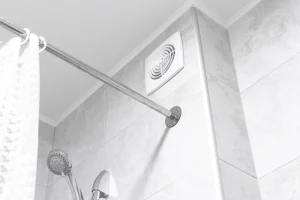
Knowing how to improve bathroom ventilation can help prevent excess moisture, reduce condensation and keep your bathroom fresher. Every time you take a shower or a hot bath, water vapour enters the air. Without adequate ventilation, this moisture can settle on walls, ceilings, mirrors and other surfaces, creating conditions that encourage mould growth and damage paintwork.
The good news is that improving airflow does not always require a major renovation. Opening a suitable window, using an extractor fan correctly, cleaning ventilation grilles and making small changes to your daily routine can all help.
However, the best solution depends on your bathroom’s size, existing ventilation system, window access and the amount of moisture produced. This guide explains practical ways to improve ventilation, identify common problems and decide when professional help may be necessary.
Why is bathroom ventilation important?
Bathrooms produce more moisture than many other rooms in the home. Hot showers, baths, wet towels and damp floors all contribute to humidity.
When warm, moist air comes into contact with cooler surfaces, condensation can form. If moisture remains for long periods, it may contribute to mould growth, peeling paint, damaged sealant and musty smells.
Good ventilation helps remove humid air and replace it with drier air from elsewhere in the home or outdoors. This allows bathroom surfaces to dry more quickly and reduces the time moisture remains trapped in the room.
Effective ventilation can help with several common problems:
- Reducing condensation on mirrors, windows and tiled surfaces.
- Limiting the conditions that encourage mould growth.
- Helping wet towels and bathroom surfaces dry more quickly.
- Reducing persistent musty smells.
- Protecting paint, plaster, grout and other finishes from prolonged dampness.
Ventilation is not a complete solution to every damp problem. Leaking pipes, damaged roof coverings, failed seals and water entering through external walls require separate repairs. If damp patches remain even when the bathroom is not being used, investigate the cause rather than assuming poor airflow is responsible.
How to improve bathroom ventilation naturally
Natural ventilation uses openings such as windows to allow fresh air to enter and humid air to escape. It can be effective when the bathroom has a suitable window and outdoor conditions allow air to circulate.
Open the window after showering
If your bathroom has an opening window, use it during or immediately after bathing when practical. Opening it after a hot shower helps moisture escape rather than allowing it to settle on cold surfaces.
Leave the window open for a suitable period, depending on the weather, outdoor air quality and the amount of moisture in the room. A short period may be sufficient after a quick shower, while a longer period may be needed after a hot bath.
In cold weather, avoid leaving the window open for unnecessarily long periods if doing so makes the room very cold. A brief period of effective ventilation may be more practical than allowing the bathroom to cool completely.
If the window faces a busy road or an area with poor outdoor air quality, consider when and how you open it. An extractor fan may provide a more convenient alternative.
Keep the window unobstructed
Heavy curtains, blinds or objects placed directly against a window can restrict how easily air moves through the opening.
Keep the window area reasonably clear so that you can open it fully when needed. If privacy is important, use suitable frosted glazing or a privacy blind that allows the window to open safely.
Do not remove essential safety features or leave an accessible window unsecured. Consider security, children and pets when choosing how to ventilate the room.
Create a route for replacement air
Air needs a way to enter the bathroom if humid air is to leave effectively. If the door and windows are tightly sealed, natural airflow may be limited.
A small gap beneath the door or a suitable transfer grille can help replacement air enter when an extractor fan is running. The correct arrangement depends on the building and the ventilation system.
Do not cut a door or alter fire-rated doors without checking the relevant requirements. If your bathroom is part of a flat or a building with shared ventilation, seek professional advice before changing air pathways.
Install or upgrade a bathroom extractor fan
An extractor fan is one of the most useful ways to remove moisture from a bathroom, particularly if there is no window or natural airflow is insufficient.
The fan draws humid air out of the room and sends it through a duct to a suitable external discharge point. It should not simply release moist air into a loft, ceiling void or enclosed cavity, where condensation can damage building materials.
Choose a fan suited to your bathroom
Extractor fans come in different sizes and capacities. The right model depends on the room’s dimensions, the position of the shower or bath, the ductwork and the amount of moisture produced.
A small bathroom with a shower may need a different setup from a large family bathroom used by several people throughout the day.
When comparing fans, consider:
- Extraction capacity, usually expressed in cubic metres per hour or litres per second.
- Noise level, especially if the bathroom is near a bedroom.
- Energy use and running costs.
- Whether the fan includes a timer or humidity sensor.
- The length, diameter and layout of the duct.
- Whether the model is suitable for the bathroom’s electrical zones and moisture exposure.
A higher-capacity fan is not automatically the best choice. Poorly designed ductwork, restrictive bends or an unsuitable outlet can reduce its actual performance.
If you are unsure which fan is appropriate, ask a qualified installer to assess the room and ventilation route.
Install the fan in the right location
The fan should be positioned to remove humid air effectively. It is often installed near the shower or bath, where moisture levels are highest, while following the manufacturer’s requirements and applicable electrical safety rules.
Avoid positioning it where cupboards, beams or other obstructions interfere with airflow. The route to the outside should be as direct as practical, with properly sized ducting and suitable weather protection at the outlet.
Bathroom electrical installations require particular care because of the presence of water. Use a qualified electrician where required, especially when installing a new circuit, moving wiring or fitting equipment in a bathroom zone.
Use the extractor fan during and after bathing
A common mistake is switching the fan off as soon as the shower ends. Moisture can remain in the air and on surfaces for some time afterwards.
Switch the fan on before or when you start showering and allow it to continue running afterwards. A timer-controlled fan can keep operating for a set period after the light is switched off.
The required running time depends on the fan, bathroom size and moisture level. Follow the manufacturer’s instructions and observe whether condensation clears effectively.
If the mirror remains fogged for a long time or surfaces continue to feel damp, the fan may need cleaning, maintenance or an upgrade.
Consider a humidity-sensing fan
A humidity-sensing extractor fan switches on or adjusts its operation when moisture levels rise. This can be useful for households where people forget to turn the fan on or where several people use the bathroom throughout the day.
Some models can continue operating until humidity falls to a set level. Others combine a humidity sensor with a timer.
These features can improve convenience, but they do not guarantee that every damp problem will disappear. The fan still needs suitable capacity, a clear duct and an effective external outlet.
Clean your existing extractor fan
If your bathroom already has an extractor fan but the room remains damp, cleaning and checking the equipment is a sensible first step.
Dust and lint can collect on the cover and grille, restricting airflow. Over time, this build-up may reduce performance and make the fan noisier.
Before cleaning, switch off the power at the appropriate isolator or circuit breaker and follow the manufacturer’s instructions. Do not put water into the motor or electrical components.
A basic maintenance routine may include:
- Removing the cover if the manufacturer allows it.
- Cleaning dust from the cover and accessible grille.
- Checking for visible obstructions around the air inlet.
- Replacing the cover securely.
- Restoring power and checking that the fan operates normally.
Do not reach into moving parts or dismantle electrical components unless you are qualified to do so. If the fan rattles, overheats, smells unusual or fails to run, arrange a professional inspection.
The ductwork and external outlet may also need checking if the fan runs but appears to move very little air.
Reduce moisture at its source
Ventilation works best when combined with habits that reduce the amount of moisture left in the bathroom.
Take shorter or less steamy showers
Long, very hot showers release moisture into the air over an extended period. Reducing shower time or choosing a slightly cooler temperature can help limit the amount of water vapour produced.
You do not need to make your shower uncomfortable. Even modest changes to how long the shower runs can reduce the moisture that ventilation must remove.
Wipe down wet surfaces
Use a squeegee or suitable cloth to remove water from shower screens, tiled walls and other wet surfaces after use.
This does not replace ventilation, because moisture remains in the air. However, it reduces the amount of water left to evaporate into the room.
Pay attention to areas where water tends to collect, such as the edges of shower trays, window sills and corners around the bath.
Hang towels so they can dry
Wet towels release moisture as they dry. If several towels are left bunched together in a small bathroom, they may remain damp for longer and increase humidity.
Spread towels across suitable rails or hooks, leaving space between them. If possible, dry them in a well-ventilated area rather than leaving several wet towels in the bathroom.
A heated towel rail can help towels dry, but it should not be treated as a replacement for proper ventilation.
Keep the shower curtain or screen clean
A damp shower curtain can retain moisture and develop unpleasant smells if it does not dry properly.
Spread the curtain out after use rather than leaving it folded together. Clean it according to the manufacturer’s instructions and replace it if it cannot be cleaned effectively.
Glass screens should also be wiped down regularly to reduce water marks and soap residue.
Improve airflow around the bathroom
Ventilation is not only about removing air. The room also needs a practical route for replacement air to enter.
If an extractor fan struggles because the bathroom is tightly sealed, opening the door slightly after use may help air move through the room. A suitable gap beneath the door may provide a more permanent solution.
Avoid blocking ventilation grilles or covering air inlets with towels, storage baskets or decorative panels. If the bathroom has a mechanical ventilation system serving several rooms, do not alter the grilles or settings without understanding how the system works.
You should also consider the rest of the home. Air entering the bathroom may come from a hallway or adjoining room, so the wider ventilation arrangement needs to work properly.
Use bathroom materials that cope with moisture
Choosing appropriate materials can make the bathroom easier to maintain, although moisture-resistant finishes cannot compensate for inadequate ventilation.
Use bathroom-rated paint on suitable walls and ceilings. These products are designed for environments where condensation may occur, but the surface still needs proper preparation and the manufacturer’s recommended application.
Seal joints around baths, shower trays and basins with suitable products, and repair failed sealant promptly. Damaged grout and cracked tiles should also be investigated because water may pass through gaps and affect the substrate behind them.
For ceilings, use finishes suitable for the room’s conditions and ensure the underlying surface is sound. If paint repeatedly peels or mould returns in the same place, check for leaks and ventilation problems rather than repeatedly repainting the area.
Materials such as tiles and waterproof wall panels can protect surfaces when installed correctly. Their joints, edges and underlying waterproofing still need attention.
How to prevent mould caused by poor ventilation
Mould can develop where moisture remains for long periods, especially on cold surfaces and in areas with limited airflow.
Look for recurring black, green or grey patches around windows, ceiling corners, grout lines and behind furniture. A persistent musty smell may also indicate a moisture problem.
To reduce the risk of mould:
- Use the extractor fan during and after bathing.
- Open a suitable window when practical.
- Wipe away standing water.
- Dry towels and bath mats thoroughly.
- Keep air inlets and extractor grilles clear.
- Repair leaks and damaged seals promptly.
- Avoid placing large items tightly against damp-prone walls.
If mould appears, clean small affected areas using a product suitable for the surface and follow its label instructions. Wear appropriate protection and avoid mixing cleaning products.
Extensive mould, recurring growth or mould linked to hidden dampness may require professional assessment. People with asthma, allergies or other respiratory concerns may need to avoid disturbing mould and seek suitable advice.
How much does it cost to improve bathroom ventilation?
The cost depends on whether you only need to improve your existing routine or install new equipment.
Simple changes, such as cleaning a fan grille, wiping down wet surfaces and making better use of an existing window, may cost little or nothing.
Replacing a basic extractor fan is usually more affordable than installing a new system with extensive ductwork. Adding a humidity sensor, upgrading the electrical supply or creating a new route through a wall or roof can increase the total.
Broad UK planning estimates might include:
| Improvement | Indicative cost |
|---|---|
| Cleaning and basic maintenance | £0–£50 |
| Basic extractor fan replacement | £100–£250 |
| New fan installation with straightforward ducting | £150–£400 |
| Higher-specification fan with timer or humidity sensor | £200–£500+ |
| More complex ventilation or ductwork changes | £300–£800+ |
These are broad estimates, not guaranteed quotations. Actual costs vary by location, materials, labour, property size and project requirements. Electrical work, difficult access, longer duct routes and repairs to walls or ceilings can add to the price.
When comparing quotes, check whether they include the fan, ducting, external grille, electrical work, installation, making good and any necessary testing. A qualified installer can explain which parts of the work are required for your bathroom.
Signs that your bathroom ventilation is not working properly
A bathroom may have inadequate ventilation even if an extractor fan is installed.
Warning signs include:
- Mirrors and windows staying fogged long after bathing.
- Condensation repeatedly forming on the ceiling.
- Musty smells that do not clear.
- Mould returning after cleaning.
- Paint peeling or blistering near the shower.
- Towels and bath mats taking an unusually long time to dry.
- An extractor fan that is noisy, weak or does not switch on.
One sign alone does not always prove that ventilation is the cause. For example, mould can also result from leaks or cold surfaces. Look at the pattern of the problem and whether it continues when the bathroom is not being used.
If the fan runs but little air seems to be removed, the grille, duct or external outlet may be obstructed. If moisture remains despite adequate ventilation, a building professional can help identify other causes.
Common bathroom ventilation mistakes to avoid
Small errors can reduce the effectiveness of an otherwise suitable ventilation system.
One common mistake is installing a fan but rarely using it. Another is allowing the fan to discharge moist air into a loft or enclosed space instead of outdoors.
Other mistakes include choosing a fan based on price alone, ignoring noise levels, blocking replacement-air routes and failing to maintain the equipment.
It is also unwise to rely solely on air fresheners, scented candles or dehumidifying tubs. These may mask smells or collect some moisture, but they do not replace effective extraction.
Finally, do not assume that opening the window will solve every problem. Natural ventilation can be helpful, but bathrooms without suitable windows may need mechanical extraction, and some rooms require both methods.
Frequently asked questions
Should I leave the bathroom window open after a shower?
If you have a suitable opening window, opening it after showering can help humid air escape. The best duration depends on the weather, outdoor air quality and how much moisture is present. Use an extractor fan as well if one is installed.
How long should a bathroom extractor fan run after a shower?
It should run long enough to remove the excess moisture. A timer may keep it running for around 15–30 minutes, but the correct period depends on the fan’s capacity and the bathroom’s conditions. If condensation remains for a long time, check the system rather than simply extending the running time indefinitely.
Can a bathroom have good ventilation without a window?
Yes. A properly installed mechanical extractor fan can remove humid air without a window. It must have suitable capacity and discharge the air to an appropriate external location.
Why is my bathroom still damp when the extractor fan is on?
Possible causes include a dirty fan, obstructed ductwork, insufficient extraction capacity, poor replacement-air flow or a faulty external outlet. Leaks and cold surfaces can also contribute. If cleaning and normal use do not improve the problem, arrange an inspection.
Does a dehumidifier replace a bathroom extractor fan?
Not usually. A dehumidifier can help reduce moisture in some situations, but it does not provide the same direct removal of humid air at its source. Proper extraction remains important, especially in bathrooms used for hot showers.
Can poor bathroom ventilation cause mould?
Poor ventilation can contribute to mould by allowing moisture to remain on surfaces for long periods. However, leaks, water penetration and cold surfaces can also cause damp conditions. Identify and address the underlying cause as well as cleaning any affected areas.
Conclusion
Learning how to improve bathroom ventilation starts with controlling moisture and making sure humid air has an effective route out of the room. Opening a suitable window, using an extractor fan correctly, cleaning the equipment and allowing towels and surfaces to dry can make a meaningful difference.
If condensation, musty smells or mould keep returning, check whether the fan is powerful enough, the ductwork is clear and replacement air can enter the bathroom. Persistent dampness may also indicate a leak or another building problem that needs attention.
A combination of good ventilation, sensible daily habits and timely maintenance will help keep your bathroom fresher, easier to maintain and better protected against moisture damage.