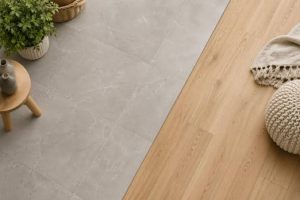
Choosing between tile vs vinyl flooring depends on where the floor will be installed, how much maintenance you want to do and what you can comfortably spend. Both materials are popular for kitchens, bathrooms, hallways and other areas that need practical, easy-to-clean surfaces. However, they differ in durability, comfort, installation and long-term maintenance.
Tile flooring, particularly ceramic and porcelain, offers a hard surface that can last for many years when correctly installed and maintained. Vinyl flooring provides a wider range of flexible and rigid designs, including products that imitate wood, stone and traditional tiles.
Neither option is automatically better for every home. Tiles may suit homeowners who want a firm, durable surface, while vinyl can be attractive to those who prefer a softer feel and a potentially simpler installation.
This guide compares the main differences, explains the advantages and disadvantages of each material, and helps you decide which flooring is most suitable for your rooms and budget.
What is the difference between tile and vinyl flooring?
Tile and vinyl flooring may look similar, but they are made from different materials and installed in different ways.
Tile flooring is commonly made from ceramic or porcelain. Ceramic tiles are manufactured from clay and other natural materials, which are shaped and fired. Porcelain tiles are made using a more refined composition and firing process, resulting in a dense body with low water absorption.
Tiles are installed over a suitable base using an appropriate adhesive or mortar, with joints usually filled with grout. The finished floor creates a firm, hard surface.
Vinyl flooring is made primarily from synthetic materials, including polyvinyl chloride (PVC). It comes in several formats, such as sheet vinyl, vinyl tiles, luxury vinyl planks and rigid-core luxury vinyl flooring.
Some vinyl products are flexible, while others have a more solid construction. They can imitate natural wood, stone or ceramic tiles without using those materials throughout the product.
Here is a quick comparison of their main features.
| Feature | Tile flooring | Vinyl flooring |
|---|---|---|
| Main materials | Ceramic, porcelain or other tile materials | Primarily synthetic vinyl-based materials |
| Water resistance | Generally good, depending on the tile and installation | Generally good, depending on the product and installation |
| Surface feel | Hard and firm | Often softer and more comfortable |
| Appearance | Natural stone effects, colours, patterns and textures | Wood, stone, tile and other decorative designs |
| Grout | Usually required between individual tiles | Not usually required, although joints remain between planks or tiles |
| Installation | Requires careful base preparation and tile fitting | Depends on whether it is sheet, adhesive, click-lock or another format |
| Repairs | Individual tiles can sometimes be replaced | Individual planks or tiles may sometimes be replaced |
| Maintenance | Tile is easy to clean, but grout needs attention | Usually straightforward to clean |
| Sound | Can produce a hard sound underfoot | Often quieter, depending on construction and underlay |
| Initial cost | Varies widely by tile type and installation | Varies by product quality and installation method |
The quality of the material and the way it is fitted can make a significant difference. Comparing specific products is more useful than assuming every tile or vinyl floor performs in the same way.
Tile vs vinyl flooring: which is more durable?
Durability is an important consideration, particularly in busy households where floors experience regular foot traffic, dropped objects and furniture movement.
Ceramic and porcelain tiles can be highly durable when selected for the intended use and installed correctly. Porcelain is dense and has low water absorption, making it a common choice for kitchens, bathrooms and entrance areas.
However, tiles are not indestructible. A heavy object can chip or crack a tile, particularly if the base beneath it is uneven or poorly supported. Repairing a damaged tile may involve removing grout, lifting the tile and fitting a replacement.
Vinyl flooring can also perform well in everyday household conditions. Its protective wear layer helps resist ordinary scuffs, stains and surface wear, although performance varies by product.
Vinyl may be more vulnerable to dents from heavy furniture or sharp objects. Some products can also be scratched, torn or discoloured by unsuitable cleaning products or certain rubber-backed mats.
For a busy family kitchen, both options can be suitable. Porcelain tiles may be attractive if you want a hard surface that can cope with frequent use, while good-quality vinyl may be practical if comfort and easier installation are higher priorities.
To protect either floor, use furniture pads, remove grit regularly and deal with spills promptly. Check the product’s wear rating or technical specification where available, and choose flooring designed for the expected level of traffic.
Water resistance and suitability for wet areas
Water resistance is one reason both tile and vinyl flooring are popular in kitchens and bathrooms. However, the complete flooring system matters just as much as the visible surface.
Porcelain tiles have very low water absorption, making them suitable for many moisture-prone areas. Ceramic tiles can also work well, but their properties vary by product.
The grout, adhesive, joints and waterproofing beneath the tiles must be suitable for the installation. Water can pass through joints or gaps and damage the subfloor if the underlying system is not properly designed.
Vinyl flooring is also generally resistant to surface water. Many products can handle everyday splashes and spills, making them useful for kitchens, utility rooms and bathrooms where the manufacturer approves their use.
However, vinyl is not automatically waterproof in every installation. Water may enter through joints, edges or damaged seams, particularly if the floor is poorly fitted. Some products are unsuitable for areas with standing water or specific wet-room applications.
For example, if water regularly splashes around a bathroom basin, suitable vinyl or tiles can both be practical. If the floor is intended for a wet room where water reaches the floor directly, the complete system must be designed for that purpose.
Choose products that are approved for the room and follow the manufacturer’s installation requirements. Good ventilation and prompt repairs to leaking pipes are also important because persistent moisture can cause problems beneath either type of flooring.
Which flooring is more comfortable underfoot?
Tile and vinyl flooring feel quite different when you walk or stand on them.
Tiles have a hard, firm surface. This can be useful in areas where you want a stable floor that is easy to clean, but it may feel uncomfortable if you stand for long periods.
Tiles can also feel cold, particularly in rooms with uninsulated concrete floors or during colder weather. Underfloor heating can improve comfort when the tiles, adhesive and heating system are compatible.
Vinyl generally feels softer underfoot, especially when comparing flexible products with ceramic or porcelain tiles. Some luxury vinyl flooring includes a backing layer designed to improve comfort and reduce sound.
This can be helpful in kitchens where someone spends time preparing meals or in homes where a quieter floor is preferred.
The exact feel depends on the product’s construction and the surface beneath it. Vinyl installed over a poor or uneven base may still feel uncomfortable or show imperfections.
If comfort is a priority, compare samples in person. You can also consider placing a washable mat in areas where you regularly stand, provided it is suitable for the flooring material.
Appearance and design choices
Both materials offer plenty of design options, but the way they create their appearance differs.
Tiles come in many colours, sizes, patterns and finishes. Ceramic and porcelain products can imitate natural stone, marble, concrete or traditional decorative designs. Some have textured surfaces, while others offer a polished finish.
Large-format tiles can create a spacious, uncluttered appearance because fewer grout lines are visible. Smaller tiles can introduce detailed patterns, particularly in bathrooms and entrance areas.
Vinyl flooring also offers a broad range of designs. Luxury vinyl planks imitate wood, while vinyl tiles can resemble stone, concrete or ceramic. Sheet vinyl is available in patterns that create a more continuous appearance.
High-quality vinyl designs can look convincing, but the result depends on the printed pattern and surface texture. Repeated patterns may be noticeable across a large area.
Consider the room’s existing colours, furniture and natural light. Pale floors may help a small room feel brighter, while darker finishes can add contrast and warmth.
If you want the genuine texture and solidity of ceramic or porcelain, tile is the obvious choice. If you prefer the look of wood or stone with a softer surface, vinyl may offer more flexibility.
Installation: which is easier to fit?
Vinyl flooring is often easier and quicker to install than tile, although the method depends on the product.
Click-lock vinyl planks and tiles connect through a joining system, while some vinyl products require adhesive. Sheet vinyl needs accurate measuring and cutting, particularly around door frames, pipes and built-in furniture.
Tiles require more preparation and careful fitting. The installer must plan the layout, apply the correct adhesive, cut tiles where necessary and leave suitable joints for grout.
The base beneath tile flooring must be stable and sufficiently flat to reduce the risk of cracking. Some installations may also require specialist waterproofing or uncoupling systems, depending on the subfloor and location.
Vinyl also needs a suitable base. Flexible products can show small imperfections beneath them, while uneven surfaces may affect click-lock joints or cause movement.
Before installation, consider the following:
- Whether the existing floor must be removed.
- Whether the subfloor needs levelling or repairs.
- Whether moisture testing or treatment is necessary.
- Which adhesive, underlay or fixing system is required.
- Whether door clearances and room transitions need adjustment.
- Whether the product is suitable for DIY installation.
Professional fitting can be worthwhile for complicated layouts, wet rooms, large tiled areas and floors requiring substantial preparation. A correctly installed floor is less likely to develop avoidable problems.
Cleaning and maintenance requirements
Both materials are relatively easy to clean, but their maintenance routines differ.
Tiles usually need regular sweeping or vacuuming and cleaning with a suitable floor cleaner. The tile surface itself is generally straightforward to maintain, but grout can collect dirt and may need extra attention.
Some grout products require sealing, while others do not. Follow the recommendations for the specific grout and tile rather than assuming all installations need the same treatment.
Vinyl can generally be swept and cleaned with a damp mop and a manufacturer-approved solution. Avoid abrasive tools and harsh chemicals that could damage the wear layer.
Excessive water should also be avoided unless the flooring system specifically permits it. Water can enter through seams or edges and cause problems beneath the surface.
For both options:
- Remove grit regularly to reduce scratching.
- Wipe up spills promptly.
- Use suitable entrance mats to limit dirt.
- Check cleaning products before using them.
- Repair damaged joints or edges when necessary.
If you prefer a floor with minimal grout cleaning, vinyl may be more convenient. However, the absence of grout does not mean that vinyl requires no maintenance.
Tile vs vinyl flooring costs
The cost of tile and vinyl flooring depends on the product, room size, installation method and amount of preparation required. Prices can vary by location, materials, labour, property size and project requirements, so obtain quotations based on your actual room and chosen product.
Basic vinyl flooring is often less expensive to purchase and install than ceramic or porcelain tiles. However, luxury vinyl products can cost considerably more than entry-level options.
Tiles also vary widely in price. Simple ceramic tiles may be relatively affordable, while large-format porcelain, decorative designs and natural stone-look products can cost more. Labour can be a significant part of the total because tile installation requires careful preparation and fitting.
Remember to budget for:
- Flooring materials.
- Adhesive, grout or underlay.
- Removal and disposal of the existing floor.
- Subfloor levelling or repairs.
- Waterproofing where required.
- Installation labour.
- Skirting boards, trims and thresholds.
- Future repairs and maintenance.
For example, a small utility room with a sound, level base may be relatively straightforward to update with vinyl. A bathroom requiring old tiles to be removed, the floor to be levelled and waterproofing to be installed could cost substantially more.
Ask for itemised quotations so you can compare material costs, preparation and labour. The cheapest initial option may not be the most suitable if it requires frequent repairs or does not meet the room’s needs.
Which flooring is best for kitchens?
Kitchen floors need to cope with dropped food, spills, regular cleaning and frequent movement.
Tiles are a popular choice because ceramic and porcelain surfaces are generally easy to clean and can withstand everyday household use. Select a suitable floor tile with appropriate slip-resistance characteristics, especially if spills are common.
Vinyl is also practical in many kitchens. It is generally comfortable underfoot and can be easier to install than tiles. Suitable products are available in wood, stone and tile designs.
Think about how the kitchen is used. If you cook frequently and stand for long periods, vinyl may feel more comfortable. If you prefer a firm surface and want a traditional tiled finish, ceramic or porcelain may be more appealing.
In either case, deal with leaks quickly and choose a product approved for kitchen use.
Which flooring is best for bathrooms?
Bathrooms need materials that can handle moisture, frequent cleaning and occasional splashes.
Porcelain tiles are a common option because they have low water absorption and are available in finishes designed for bathroom floors. Slip resistance should be considered alongside appearance, particularly where the surface may become wet.
Suitable vinyl flooring can also work well in bathrooms, provided the manufacturer approves it for the intended conditions. Correct fitting around edges and plumbing is important to prevent water reaching the subfloor.
For a wet room, do not simply select a product because its surface resists water. The floor, drainage, joints and waterproofing must form a suitable system designed for that use.
Your choice may come down to budget, comfort and the level of moisture exposure. Tiles offer a hard, traditional finish, while vinyl can provide a softer surface with straightforward cleaning.
Environmental and indoor air quality considerations
If environmental impact is important to you, compare the complete product rather than assuming either material is always the better choice.
Ceramic and porcelain tiles are made mainly from mineral-based materials and can have a long service life when correctly installed. However, manufacturing requires energy, and tiles can be heavy to transport. Removal and disposal may also involve considerable work.
Vinyl flooring is made primarily from synthetic materials. Its environmental impact depends on manufacturing, product composition, durability and what happens when it reaches the end of its useful life. Recycling options vary by location and product.
For either material, consider product emissions and any available information about indoor air quality. Follow the manufacturer’s guidance for adhesives, sealants and other installation products.
A durable floor that remains suitable for many years may reduce the need for frequent replacement. If your existing floor is sound and safe, consider whether it genuinely needs to be replaced.
Common mistakes to avoid
A few mistakes can affect the appearance, safety and lifespan of a new floor.
Choosing based only on appearance: A polished tile may look attractive but could be unsuitable for a wet area if it offers insufficient grip. Check the product’s intended use.
Ignoring subfloor preparation: Uneven or unstable surfaces can cause tile cracking or affect vinyl joints and appearance.
Assuming every vinyl floor is waterproof: Performance depends on the product, seams, edges and installation system.
Overlooking grout maintenance: Dirty or damaged grout can make a tiled floor harder to maintain and may allow moisture to reach the layers below.
Using unsuitable cleaning products: Harsh chemicals and abrasive tools can damage certain surfaces and finishes.
Choosing the wrong installation method: Incorrect adhesive, underlay or waterproofing can cause avoidable failures.
Forgetting long-term repairs: Keep spare tiles or vinyl planks where practical, especially if the design may be discontinued.
Planning these details before buying helps you choose a product that suits the room rather than relying on appearance alone.
Frequently asked questions
Is tile flooring better than vinyl flooring?
Tile may be better if you want a hard, durable surface with a traditional tiled appearance. Vinyl can be more suitable if comfort, easier installation and a softer feel are priorities. The best choice depends on the product and room conditions.
Which is cheaper, tile or vinyl flooring?
Basic vinyl is often cheaper to buy and install than many tiled floors. However, costs vary by location, materials, labour, property size and project requirements. Premium vinyl and expensive tiles can change the comparison, so compare the total installed cost.
Can vinyl flooring last as long as tiles?
Both can provide years of service when correctly selected and maintained. Tiles may last a long time but can crack or chip, while vinyl may wear, tear or become damaged. Product quality, installation and daily use affect longevity.
Is vinyl flooring suitable for bathrooms?
Many vinyl products are suitable for bathrooms, but not all are designed for wet-room conditions. Check the manufacturer’s guidance and ensure the installation prevents water from reaching the subfloor.
Are tiles harder to clean than vinyl?
The tile surface is usually easy to clean, but grout can require additional attention. Vinyl generally has fewer joints to maintain, although it still needs regular cleaning and prompt attention to spills.
Can I install tile or vinyl flooring myself?
Some vinyl products are designed for DIY installation. Tile fitting is more demanding because it requires careful layout, cutting, adhesive application and grouting. Either project can require professional help if the subfloor needs extensive preparation.
Conclusion
The choice between tile and vinyl flooring depends on your budget, comfort preferences, room conditions and maintenance expectations. Ceramic and porcelain tiles offer a firm, durable surface and many design choices, while vinyl provides a softer feel, straightforward cleaning and a wide range of decorative finishes.
Tiles may suit kitchens, bathrooms and entrance areas where a hard surface is preferred. Suitable vinyl can be practical in the same spaces, provided it is approved for the expected moisture and use.
Before deciding, compare specific products, check slip resistance and water-resistance guidance, and include preparation and installation in your budget. A properly prepared subfloor and correct installation are essential for both materials.
By choosing flooring that matches the needs of each room, you can create a practical, attractive finish that works well for your home over the long term.