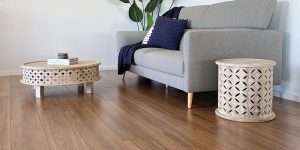
When comparing hardwood vs laminate flooring, the right choice depends on your budget, lifestyle, preferred appearance and the rooms you want to update. Both options can create an attractive floor that complements modern and traditional interiors, but they differ in construction, durability, maintenance and long-term value.
Hardwood flooring is made from natural timber, giving every board its own grain patterns and character. Laminate flooring uses a decorative surface over a manufactured core to reproduce the appearance of wood, often at a lower purchase price.
Neither material is automatically the best option for every home. Hardwood may appeal to homeowners who value natural materials and the ability to refinish suitable boards, while laminate can be practical for those who want an attractive wood-effect finish with straightforward maintenance.
This guide compares their main features, explains where each works best and outlines the costs and practical details to consider before making a decision.
What is the difference between hardwood and laminate flooring?
The biggest difference is that hardwood flooring contains real timber throughout the board, while laminate flooring is manufactured using several layers.
Solid hardwood boards are made from a single piece of timber. Common choices include oak, ash and other wood species, each offering different colours, grain patterns and characteristics.
Laminate flooring typically consists of a fibreboard core, a printed decorative layer and a protective surface coating. The printed design imitates natural wood, stone or other materials.
There is also engineered wood flooring, which has a real wood surface layer attached to a layered core. Although it is often compared with laminate, engineered wood is not the same product because its visible surface is genuine timber.
| Feature | Hardwood flooring | Laminate flooring |
|---|---|---|
| Main material | Natural timber | Manufactured core with a printed decorative layer |
| Appearance | Genuine wood grain and natural variation | Wood-effect designs and repeated printed patterns |
| Initial cost | Usually higher | Often more affordable |
| Scratch resistance | Depends on wood species and finish | Depends on surface coating and product quality |
| Water resistance | Generally sensitive to moisture | Standard products are vulnerable to water entering joints |
| Refinishing | Many suitable boards can be sanded and refinished | Usually cannot be sanded and refinished |
| Maintenance | May require refinishing or protective treatment | Generally needs routine cleaning |
| Repair options | Damaged boards may be repaired or replaced | Individual boards may sometimes be replaced |
| Long-term appeal | Natural material that can develop character | Appearance depends on the quality and condition of the printed surface |
These differences are general guidelines. The performance of a particular floor depends on its construction, finish, installation and the conditions inside your home.
Hardwood vs laminate flooring: which looks better?
Appearance is often the first consideration when choosing flooring. Both materials can suit a wide range of interior styles, but they achieve their look differently.
Hardwood has natural variations in grain, colour and texture. Even boards from the same tree can look different, creating a floor with an individual character. Over time, timber may develop changes in colour and signs of use that some homeowners appreciate.
Oak hardwood, for example, can suit traditional living rooms, while lighter timber may complement a modern interior with neutral walls and simple furniture.
Laminate flooring uses printed designs to imitate natural materials. Higher-quality products can reproduce convincing wood patterns, textured finishes and varied plank designs. This allows homeowners to achieve a timber-inspired appearance without purchasing solid wood.
However, the realism varies between products. Repeated patterns may become noticeable across a large floor, particularly with cheaper ranges. Examining several boards together can help you judge how natural the finished surface will look.
Hardwood is generally the stronger choice if you specifically want genuine timber. Laminate may be more suitable if you want a particular colour or wood effect at a lower initial cost.
Lighting also matters. Pale flooring can help a room feel brighter, while darker boards can create contrast and warmth. Always check samples in the room where they will be installed, because artificial lighting and daylight can change how colours appear.
Durability and resistance to everyday wear
Hardwood and laminate can both perform well in residential settings, but they respond differently to scratches, impacts and other everyday damage.
Hardwood is a relatively durable flooring material, although its resistance to dents and scratches depends on the timber species, surface finish and thickness. Softer wood species can mark more easily than harder ones.
A damaged hardwood floor may be repairable. Depending on the board construction and condition, it may be possible to sand away surface wear, apply a new finish or replace individual boards.
Laminate has a protective top layer designed to resist ordinary surface wear. Its performance depends on the quality of that layer and the product’s intended use. A well-chosen laminate can be suitable for busy living rooms and hallways.
However, laminate can chip if a heavy object strikes it, and moisture can damage its core. Once the printed decorative layer is badly damaged, it is difficult to restore the original appearance.
For a household with children or pets, consider more than scratch resistance. Dropped toys, muddy shoes, water bowls and furniture movement can all affect a floor.
Useful precautions for both materials include:
- Place protective pads under furniture legs.
- Use entrance mats to reduce grit brought in from outside.
- Clean spills promptly.
- Lift heavy furniture instead of dragging it.
- Follow the manufacturer’s recommendations for cleaning products.
If your home experiences heavy daily use, compare the product specifications and warranty conditions rather than assuming that all hardwood or laminate floors perform in the same way.
Which flooring handles water better?
Moisture is an important consideration because both materials can be damaged by excessive water.
Hardwood naturally responds to changes in humidity. Timber can expand when it absorbs moisture and contract when conditions become drier. Significant or repeated moisture exposure can cause warping, gaps, cupping or other problems.
Laminate is also vulnerable to moisture, particularly where water enters the joints and reaches the fibreboard core. Some products include water-resistant surface treatments and improved locking systems, but their protection has limits.
For example, a small drink spill that is wiped up quickly may not cause a problem with either material. A leaking washing machine left unnoticed for several hours presents a much greater risk, especially for standard laminate.
Neither solid hardwood nor conventional laminate is generally the first choice for a bathroom that regularly becomes wet.
For kitchens, the decision depends on the likelihood of spills, ventilation, maintenance habits and the product selected. Hardwood can work in some kitchens when properly finished and maintained, but it requires care. Suitable water-resistant laminate may also be an option if the manufacturer approves it for that environment.
If moisture resistance is your main priority, consider whether a suitable vinyl or tile product would be more practical.
Always address leaks and dampness before installing a new floor. A surface finish cannot compensate for a persistently damp subfloor.
Installation: what should homeowners expect?
The installation process affects both the finished appearance and the floor’s long-term performance.
Hardwood flooring may be installed using nails, staples, adhesive or other methods, depending on the board type and subfloor. Solid timber generally needs careful consideration of moisture and temperature conditions before installation.
Some hardwood products can be installed by experienced DIY enthusiasts, but professional fitting may be worthwhile where the layout is complicated or the subfloor requires substantial preparation.
Laminate is often designed for click-lock installation. The boards connect at their edges and usually sit over a suitable underlay. This can make it more accessible to homeowners who want to complete the work themselves.
However, easy installation does not mean preparation can be skipped. Both materials need an appropriate base that is clean, stable, dry and sufficiently level.
Before installation, check:
- Whether the subfloor is suitable for the chosen material.
- Whether moisture testing or treatment is necessary.
- Which underlay or fixing method the manufacturer requires.
- Whether the flooring needs to acclimatise.
- How much expansion space must be left around the edges.
- Whether doors, skirting boards and thresholds need adjustment.
Expansion gaps are particularly important because wood-based flooring can move as conditions change. The precise requirements depend on the product and room dimensions.
Underlay should never be selected by thickness alone. An unsuitable product can affect stability, sound performance or the locking joints.
Professional installation adds to the budget, but correct fitting can reduce the risk of movement, gaps and other problems that may be expensive to correct later.
Maintenance and cleaning requirements
Laminate is usually simpler to maintain because it does not normally require sanding, polishing or periodic refinishing. Regular sweeping or vacuuming and careful cleaning are generally sufficient.
Use a slightly damp mop only if permitted by the manufacturer. Avoid leaving standing water on the floor, particularly around joints and edges.
Hardwood also benefits from regular sweeping or vacuuming, but the correct cleaning method depends on the finish. Some floors have lacquered surfaces, while others use oil or other protective treatments.
A suitable timber cleaner can help preserve the finish. Excessive water and harsh chemicals should be avoided unless the manufacturer specifically recommends them.
Over time, hardwood may need additional treatment or refinishing. The timing depends on the level of wear, the finish and the condition of the boards.
Laminate cannot usually be sanded to remove scratches because the decorative layer is thin. Severe damage may require replacement of affected boards or a larger section of flooring.
For both materials, prevention is often easier than repair. Remove grit regularly, protect the floor from furniture legs and clean spills promptly.
Cost comparison: hardwood vs laminate flooring
Laminate is generally cheaper to purchase than solid hardwood, although premium laminate can cost more than basic timber products in some markets. The total project price depends on material quality, room size, installation method and the condition of the existing floor.
Hardwood can have a higher initial cost because it uses natural timber and may require specialist fitting or finishing. Additional expenses can include sanding, protective coatings and subfloor preparation.
Flooring prices vary by location, materials, labour, property size and project requirements. Therefore, online estimates should be treated as broad guidance rather than guaranteed quotations.
When calculating the total cost, include:
- Flooring materials.
- Underlay, adhesive or fixings.
- Removal and disposal of existing flooring.
- Subfloor repairs and levelling.
- Installation and finishing.
- Skirting boards, thresholds and door adjustments.
- Future maintenance and possible repairs.
For example, a low-priced laminate floor may be economical for a spare bedroom that needs a straightforward update. Hardwood may be worth considering for a main living room where you value natural timber and expect to maintain the floor over time.
Ask installers for itemised quotations so you can compare material and labour costs separately. Also ask what preparation is included and whether additional charges could arise if the subfloor needs repairs.
Buying extra material for cuts and keeping spare boards for future repairs can also be helpful. The amount needed depends on the room layout, installation pattern and manufacturer’s guidance.
Long-term value and lifespan
Initial price is only one part of the decision. The value of a floor also depends on how long it performs well, how easily it can be repaired and whether its appearance continues to suit the home.
Hardwood can offer long-term value because suitable solid boards may be refinished more than once. The number of possible refinishing cycles depends on the board’s thickness, condition and previous treatment.
Its ability to be repaired can be useful when a small area becomes worn or damaged. However, refinishing takes time and may require professional work, while moisture-related damage can still be costly.
Laminate can provide good value when a homeowner wants an attractive floor without a large initial investment. It is relatively straightforward to clean and does not usually need refinishing.
Its main limitation is that serious surface damage is harder to restore. Replacing boards may also be difficult if the original product has been discontinued or the colour has changed over time.
Neither option guarantees an increase in property value. Buyers’ preferences, the condition of the home and the quality of the installation all influence how flooring is perceived.
Choose based on how long you expect to stay in the property, the care you are willing to provide and the total cost of ownership rather than relying on assumptions about resale value.
Which rooms are best suited to hardwood and laminate?
The best material often depends on how a particular room is used.
Living rooms
Both materials can work well in living rooms. Hardwood provides natural grain and texture, while laminate offers a wide choice of wood-effect finishes.
Consider foot traffic, furniture, pets and the likelihood of spills. Rugs can add softness and protect selected areas, provided their backing is compatible with the floor finish.
Bedrooms
Hardwood and laminate are both practical choices for bedrooms. Laminate may be attractive where simple maintenance and a controlled budget are priorities.
Hardwood can suit homeowners who prefer genuine timber and are comfortable with its care requirements. Rugs can provide extra warmth and comfort with either option.
Hallways
Hallways often experience more wear because people walk through them repeatedly and bring in dirt from outdoors.
A suitable durable laminate can be practical, while hardwood may be appropriate if the finish and maintenance routine suit the level of traffic. Entrance mats and regular cleaning help protect both surfaces.
Dining rooms
Both materials can create an attractive dining area. However, chairs may scratch the floor when moved, and food or drink spills need prompt attention.
Use felt pads beneath chair legs and wipe up spills quickly, especially on moisture-sensitive surfaces.
Kitchens
Hardwood can be used in some kitchens, but regular spills and leaks require careful management. Laminate may also be suitable when a product is approved for kitchen use, although its water-resistance limits should be understood.
For households that expect frequent spills or want lower moisture-related risk, suitable vinyl or tile flooring may be a more practical alternative.
Bathrooms and utility rooms
Conventional hardwood and standard laminate are generally less suitable for rooms with regular exposure to water. Consider a flooring product specifically designed for the intended wet conditions.
Common mistakes to avoid when choosing flooring
A few simple checks can prevent expensive problems.
Choosing on appearance alone: A beautiful floor may not suit a room with frequent spills or heavy traffic. Consider function as well as design.
Ignoring moisture conditions: Damp subfloors can damage wood-based products and affect the finished floor. Investigate leaks and moisture before installation.
Skipping preparation: Uneven or unstable surfaces can lead to movement, gaps and other defects.
Using the wrong cleaning products: Strong chemicals or excessive water can damage finishes and joints.
Assuming laminate is waterproof: Water-resistant products have different performance limits. Read the manufacturer’s guidance carefully.
Failing to check refinishing options: Not every timber floor can be sanded repeatedly, and laminate generally cannot be refinished like solid wood.
Buying too little material: Insufficient boards can delay installation and make matching a future repair difficult.
Careful planning helps ensure the floor is appropriate for the room and avoids unnecessary maintenance or replacement costs.
Frequently asked questions
Is hardwood flooring better than laminate?
Hardwood is generally preferable if you want genuine timber, natural variation and the possibility of refinishing suitable boards. Laminate may be better if you want a lower initial cost, a wood-effect appearance and straightforward routine maintenance.
Does laminate flooring last as long as hardwood?
It depends on the quality of the product, installation, foot traffic and maintenance. Suitable hardwood can often be refinished, which may extend its useful life. Laminate can remain attractive for years but is harder to restore if its decorative surface becomes badly damaged.
Which flooring is easier to clean?
Both are relatively easy to clean. Laminate usually requires little more than regular sweeping and careful damp cleaning. Hardwood also needs routine cleaning, but the correct products depend on whether its surface is lacquered, oiled or treated in another way.
Can hardwood or laminate flooring be installed over concrete?
Some products can be installed over concrete when the surface is properly prepared and the manufacturer’s requirements are followed. Moisture testing, suitable underlay or a specified moisture barrier may be necessary. The correct approach depends on the flooring system and the condition of the concrete.
Is hardwood worth the extra cost?
It may be worthwhile if you value natural timber, expect to maintain the floor and want the option to refinish suitable boards. However, the higher initial cost and ongoing care may not suit every household. Compare total costs and practical needs before deciding.
Which flooring is better for homes with pets?
Both can work in homes with pets, but the right choice depends on scratch resistance, moisture exposure and cleaning needs. Compare individual products, protect furniture and deal with accidents promptly. Neither material is completely resistant to damage.
Conclusion
The choice between hardwood and laminate flooring comes down to your priorities. Hardwood offers genuine timber, natural character and the possibility of refinishing suitable boards, while laminate provides an affordable wood-effect finish with relatively simple maintenance.
For dry living spaces and bedrooms, either option can work well when properly selected and installed. Hardwood may appeal to those who value natural materials and long-term repair options, while laminate is useful for homeowners who want to manage their initial spending.
Before buying, compare product specifications, installation costs, moisture requirements and maintenance needs. Prepare the subfloor properly and choose flooring that suits the way each room is used.
By considering the full cost and practical demands of each material, you can choose a floor that complements your home and serves your household well.