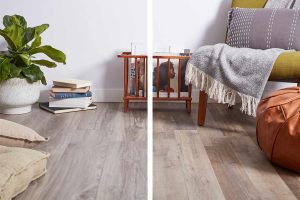
Choosing between vinyl vs laminate flooring can be difficult because both materials offer attractive designs, practical maintenance and a wide range of prices. They can imitate natural wood and stone, making them popular alternatives to more expensive flooring materials. However, they differ in construction, water resistance, comfort, durability and installation requirements.
Vinyl flooring is often preferred in areas where spills and moisture are common, while laminate is popular for its realistic wood appearance and generally affordable price. Neither option is automatically better for every home. The right choice depends on the room, your household’s needs and how much maintenance you are prepared to undertake.
This guide compares vinyl and laminate flooring in practical terms, covering their advantages, disadvantages, costs and suitability for different rooms. By understanding how each material performs, you can make a confident decision that suits your budget and lifestyle.
What is the difference between vinyl and laminate flooring?
The main difference between vinyl and laminate flooring is the material used to make each product.
Vinyl flooring is primarily made from synthetic materials, including polyvinyl chloride (PVC). Depending on the product, it may have a backing layer, a printed decorative layer and a protective wear layer. Luxury vinyl products may also include a rigid or flexible core.
Laminate flooring usually has a fibreboard core, a printed decorative layer and a protective surface coating. The design often imitates wood grain, stone or other natural materials. Many products have a click-lock system that allows the boards to fit together without glue.
These differences affect how the flooring responds to water, how it feels underfoot and how it should be installed.
| Feature | Vinyl flooring | Laminate flooring |
|---|---|---|
| Main construction | Synthetic vinyl-based layers | Fibreboard core with decorative and protective layers |
| Water resistance | Generally better, depending on the product | Standard products are more vulnerable to water |
| Appearance | Wood, stone and tile designs | Particularly popular for wood-effect designs |
| Comfort | Often softer and quieter underfoot | Can feel firmer and sound hollow without suitable underlay |
| Scratch resistance | Depends on the wear layer and product quality | Depends on the surface coating and product specification |
| Maintenance | Usually straightforward | Straightforward, but excess water can cause damage |
| Installation | Click-lock, loose-lay or adhesive systems | Commonly click-lock |
| Best uses | Kitchens, hallways and many moisture-prone areas | Bedrooms, living rooms and dry areas |
Always check the manufacturer’s specifications. Vinyl and laminate products vary considerably, so the general differences do not apply equally to every product.
Vinyl vs laminate flooring: which handles water better?
Water resistance is one of the most important differences to consider.
Vinyl flooring is generally the better choice for rooms where spills, splashes and regular cleaning are expected. Many vinyl products resist water across the surface, and some are designed for installation in areas with higher moisture levels.
This makes suitable vinyl flooring a practical option for kitchens, utility rooms and many bathrooms. However, not every vinyl product is suitable for every wet area. Water can still reach the subfloor through poorly sealed edges, joints or installation defects.
Laminate flooring is more sensitive to moisture because many products have a fibreboard core. If water enters the joints or remains on the surface for too long, the core may swell, causing raised edges or permanent damage.
Some modern laminate floors have water-resistant treatments and joint systems. These can provide additional protection against everyday spills, but water resistance does not necessarily mean waterproofing.
For example, if a washing machine leaks in a utility room, suitable vinyl flooring is generally more forgiving than standard laminate. If the same room uses laminate, a prolonged leak may damage the boards and the underlying surface.
For bathrooms, choose flooring specifically approved for the intended conditions and follow the installation instructions. Neither material should be treated as a substitute for proper waterproofing where it is required.
Which flooring looks more realistic?
Both materials have improved significantly in appearance, and the best choice depends on the design you want.
Laminate flooring is particularly popular for its wood-effect designs. Its printed patterns and textured finishes can create a convincing imitation of oak, walnut and other timber species. Some products include surface textures that follow the printed grain, giving the boards a more natural appearance.
Vinyl flooring also offers realistic wood designs, along with stone, slate, marble and tile effects. Luxury vinyl planks can resemble timber, while vinyl tiles may be suitable for homeowners who prefer a stone-like appearance without installing natural stone.
The quality of the design matters more than the material name alone. Look at the number of different patterns in a product range, the surface texture, plank dimensions and how the boards look together.
A low-cost product with a repeated pattern may look less natural than a better-designed option, regardless of whether it is vinyl or laminate.
Consider the room’s lighting as well. Pale flooring can help a small or dim room feel brighter, while darker finishes may create a more dramatic appearance. Samples are useful because colours can look different under natural and artificial light.
If your main priority is a convincing timber effect in a dry living room, laminate may be an excellent option. If you want a wood or stone appearance in an area exposed to moisture, vinyl may offer greater practical flexibility.
Durability and resistance to everyday wear
Both flooring types can perform well in busy homes, but their durability depends on the product specification and how the floor is used.
Vinyl flooring has a protective wear layer that helps resist everyday scuffs, stains and surface damage. The thickness and quality of this layer can influence performance, although it should not be the only factor used to compare products.
Heavy furniture, sharp objects and grit carried in on shoes can still mark vinyl. Some types may also be vulnerable to dents from concentrated weight, and certain rubber-backed mats can discolour particular vinyl surfaces.
Laminate flooring has a hard protective surface designed to resist ordinary wear and scratches. It can be a practical choice for hallways, living rooms and other areas with regular foot traffic.
However, laminate edges can be damaged by water, while dropped heavy objects may chip the surface. Once the decorative layer is badly damaged, it is usually difficult to repair invisibly.
For homes with pets or children, consider how each product handles spills, claws, dropped toys and frequent cleaning. A well-specified floor that suits the room is more useful than choosing solely by price or advertised durability.
Protect both materials by using furniture pads, cleaning away grit and avoiding dragging heavy items across the surface.
Comfort, warmth and noise
Comfort matters when you spend a lot of time walking or standing on a floor.
Vinyl flooring often feels slightly softer underfoot than laminate, particularly when comparing flexible vinyl with a rigid laminate board. Some luxury vinyl products include backing designed to improve comfort and reduce sound.
Laminate flooring tends to have a firmer feel. Depending on the installation and subfloor, it may produce a hollow or clicking sound when walked on. A compatible underlay can help reduce some noise, but the result depends on the entire flooring system.
Neither material is as soft as carpet, although both can work well in bedrooms and living rooms where a hard surface is preferred.
Temperature is another consideration. Both can feel cool in winter, especially when installed over a cold concrete floor. The type of subfloor, insulation and room conditions all influence how warm the surface feels.
If you have underfloor heating, check that the flooring, underlay and installation method are approved for the system. Maximum surface temperatures and installation requirements can differ between products.
For flats and upstairs rooms, check any sound insulation requirements before installation. Underlay should be selected for the specific flooring and building conditions rather than simply choosing the thickest available option.
Installation: which is easier to fit?
Vinyl and laminate can both be suitable for DIY installation, but the difficulty depends on the product and the condition of the room.
Click-lock laminate is commonly installed by connecting boards over an approved underlay. It does not normally require adhesive between the boards, although the floor may need careful cutting around door frames, pipes and corners.
Vinyl flooring comes in several formats. Click-lock luxury vinyl planks and tiles use a joining system, while some products need adhesive. Sheet vinyl may require precise cutting and careful fitting around obstacles.
The subfloor is important for both materials. It should be clean, dry, stable and sufficiently level. Flexible vinyl can show imperfections in the surface beneath it, while unevenness can affect joints and movement in click-lock floors.
Before installation, check the following:
- Whether the product is compatible with the existing subfloor.
- Whether an underlay, moisture barrier or adhesive is required.
- How much expansion space must be left around the room.
- Whether the floor needs to acclimatise before fitting.
- Whether the manufacturer permits installation over the existing flooring.
- How the flooring should be finished at doorways and room transitions.
Do not assume that all vinyl products need underlay or that any underlay can be used with laminate. Incorrect materials may affect the locking system, stability or warranty.
Professional installation may be worthwhile for complicated layouts, significant subfloor repairs, sheet vinyl or rooms requiring specialist moisture protection.
Maintenance and cleaning requirements
Both vinyl and laminate are relatively easy to maintain compared with some natural flooring materials. However, their cleaning requirements are not identical.
Vinyl can generally be swept, vacuumed with a suitable setting or cleaned with a damp mop and an approved cleaning solution. Avoid abrasive pads, harsh chemicals and excessive water unless the manufacturer explicitly allows them.
Laminate should also be swept or vacuumed regularly. Clean spills promptly and use only the amount of moisture recommended by the manufacturer. Excess water can seep into joints and damage the core.
For either material, follow these simple habits:
- Remove grit and dirt regularly to reduce surface scratching.
- Use entrance mats to catch moisture and debris.
- Place protective pads beneath furniture legs.
- Wipe up spills as soon as possible.
- Avoid dragging heavy furniture across the floor.
- Check cleaning products before applying them to the whole surface.
Neither flooring type usually requires sanding or periodic sealing like some timber or stone floors. Nevertheless, protective coatings and surface finishes can wear over time.
If the floor becomes badly scratched, chipped or swollen, a local repair may be possible depending on the product. Click-lock boards can sometimes be replaced, but the repair may require dismantling part of the floor or accessing the damaged board from an edge.
Vinyl vs laminate flooring costs
The cost of vinyl and laminate flooring depends on the quality, design, thickness, installation method and preparation needed. Prices can vary by location, materials, labour, property size and project requirements, so it is important to obtain current quotations for your particular home.
Basic vinyl and laminate products can both be relatively affordable. Higher-end luxury vinyl and premium laminate ranges may cost considerably more, particularly when they include realistic textures, specialised cores or enhanced protective features.
The total project cost may include:
- Flooring materials.
- Underlay or adhesive, where required.
- Removal and disposal of the existing floor.
- Subfloor levelling, repairs or moisture treatment.
- Professional installation.
- Skirting boards, thresholds and finishing strips.
- Adjustments to doors if the new floor changes the finished height.
For example, an inexpensive laminate product may appear to offer the lowest price, but the total cost can increase if the room needs substantial preparation. Similarly, a more expensive vinyl product may be worthwhile if its moisture resistance better suits the room.
Ask installers to separate material, preparation and labour costs in their quotations. This makes it easier to compare like for like.
It is also sensible to purchase a suitable allowance for cutting and future repairs. The amount required depends on the room shape, plank direction and installation pattern.
Which is better for kitchens, bathrooms and living rooms?
The best material depends on the conditions in each room.
Kitchens
Vinyl is often a practical choice because kitchens are exposed to spills, splashes and frequent cleaning. Select a product designed for the expected level of moisture and traffic.
Laminate can work in a kitchen if the product is specifically suitable for that environment and spills are dealt with promptly. Standard moisture-sensitive laminate is less forgiving if water repeatedly reaches the joints.
Bathrooms
Suitable vinyl flooring is generally the more practical option of the two because of its water resistance. However, check that the particular product is approved for bathroom use and install it according to the manufacturer’s guidance.
Standard laminate is usually best avoided in bathrooms. Even water-resistant versions have limits, and correct waterproofing remains important.
Living rooms
Both materials can work well in living rooms. Laminate may appeal if you want a traditional wood effect, while vinyl offers a wide range of designs and may provide better protection against occasional spills.
Think about furniture, pets, foot traffic and the style of the adjoining rooms before deciding.
Bedrooms
Laminate is a popular choice for bedrooms because it offers a wood-like appearance and is straightforward to clean. Vinyl is also suitable if you prefer a softer-feeling hard surface or want continuity with other rooms.
A rug can add warmth and comfort to either type of floor, provided its backing is compatible with the flooring finish.
Hallways and entrance areas
Hallways often collect water, grit and dirt from outdoors. Suitable vinyl can be useful in these areas, while a durable laminate product may also work where moisture exposure is controlled.
Use a doormat and clean grit regularly to help protect the surface.
Environmental considerations
If environmental impact is important to you, compare the complete product rather than assuming one material is always more sustainable.
Vinyl is made from synthetic materials and can be difficult to recycle through ordinary household schemes. Its environmental impact depends on manufacturing, product composition, transport, lifespan and end-of-life options.
Laminate often contains wood-based fibreboard, but it also includes resins, decorative layers and surface coatings. These components can make recycling difficult, depending on the product and facilities available locally.
A floor that lasts for a long time and does not need frequent replacement may reduce material waste. Look for transparent information about product composition, indoor emissions, durability and disposal options.
Do not rely on broad environmental labels without checking what they actually cover. If you are replacing an existing floor, consider whether it can remain in place safely rather than removing it solely for cosmetic reasons.
Common mistakes when choosing vinyl or laminate
Several avoidable mistakes can affect the finished floor and its lifespan.
Choosing by price alone: A cheap product may not offer the right protection for a busy or damp room. Compare specifications and expected use.
Ignoring the subfloor: Both materials need an appropriate base. Unevenness, dampness and loose sections should be addressed before installation.
Assuming water-resistant means waterproof: Water-resistant laminate can still be damaged under certain conditions. Vinyl products also have limitations around joints, edges and installation.
Using unsuitable cleaning products: Abrasive cleaners, excessive water and incompatible rubber-backed mats can damage some flooring surfaces.
Forgetting room transitions: Different floor heights can create awkward edges between rooms. Plan thresholds and door clearances before installation.
Failing to check warranties: A warranty may exclude damage caused by moisture, incorrect installation or unsuitable cleaning. Read the conditions rather than relying on the headline duration.
Planning for these details can help you avoid unnecessary repairs and choose a floor that performs well in everyday use.
Frequently asked questions
Is vinyl flooring better than laminate?
Vinyl is generally better where water resistance is a priority, while laminate can be an excellent choice for dry rooms where a realistic wood appearance and value are important. The best option depends on the product specification and intended room.
Which lasts longer, vinyl or laminate?
Both can last for many years when correctly selected, installed and maintained. Lifespan depends on product quality, wear, foot traffic, moisture exposure and how the floor is cleaned. Check the manufacturer’s warranty and care instructions.
Can vinyl flooring look like real wood?
Yes. Many luxury vinyl products imitate timber through printed grain patterns, varied plank designs and textured finishes. Quality differs between ranges, so viewing samples in person can help you judge how realistic the finish looks.
Can laminate flooring get wet?
Small spills can often be managed safely when wiped up promptly, particularly with products designed to resist moisture. However, prolonged exposure can damage many laminate floors. Follow the product’s specific water-resistance guidance.
Is vinyl or laminate easier to install?
Both can be relatively straightforward when using click-lock systems on a suitable subfloor. The difficulty depends on room shape, product design, cutting requirements and preparation. Sheet vinyl and floors requiring adhesive may need more specialised fitting.
Which flooring is better for pets?
Both can work in homes with pets. Compare scratch resistance, moisture protection and ease of cleaning rather than relying on the material name alone. Keep claws maintained, wipe up accidents promptly and use mats near water bowls.
Conclusion
When comparing vinyl vs laminate flooring, the most important factors are water resistance, appearance, comfort, durability and total cost. Vinyl is often the more practical choice for kitchens, utility rooms and many bathrooms, provided the product is approved for the intended conditions. Laminate is an attractive option for bedrooms, living rooms and other dry areas where a wood-effect finish is desirable.
Neither material is automatically the best choice for every home. Compare product specifications, prepare the subfloor properly and follow the manufacturer’s installation and maintenance instructions.
By matching the flooring to the room rather than choosing on appearance or price alone, you can achieve a practical finish that suits your household and budget for years to come.